Speakers
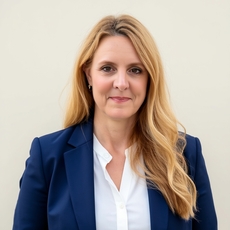
Founder & CEO
Builders + Backers

You’ve got a big idea. Now what?
Forget the guesswork and lengthy business plans. Don’t jump to building product or raising capital.
Before you waste time building something nobody wants, come learn how today’s smartest founders are flipping the script—testing assumptions, running cheap experiments, and proving traction before they go all in.
In this hands-on session, we’ll show you how to:
Participants will also get a sneak peek at one of the most advanced AI platforms for enabling entrepreneurs to bring their ideas to life.
This session is ideal for entrepreneurs and GEN members ready to turn their ideas into market-ready solutions. And it embodies the Global Entrepreneurship Network's mission to make entrepreneurship accessible to anyone, anywhere by removing traditional barriers to starting and scaling successful ventures.
About the GEN Global Assembly
The GEN Global Assembly (GGA) brings together diverse experts and practitioners from around the world to brainstorm strategies and learn skills for strengthening the global entrepreneurial ecosystem. To kick off the GEC, the immersive GGA workshops will provide the tools and insights to help us build thriving entrepreneurial ecosystems together around the 2025 themes, including "The World Needs More Entrepreneurs."
About the World Needs More Entrepreneurs
The world needs more individuals experimenting, launching, and scaling ventures. This track will focus on how to inspire more people to take this path, thereby increasing the number of people using entrepreneurial support organizations (ESOs) and getting started.
(AI-generated session recap made available by Google NotebookLM)
Dive deep into the stark realities of startup failure rates, funding challenges, and why traditional approaches like building an MVP too early often lead to wasted time and money. Donna Harris, a six-time entrepreneur and seasoned investor, shares eye-opening data on why most ideas never get started and introduces a powerful methodology focused on testing core assumptions with quick, cheap, low-fidelity experiments before significant investment. Learn how to move from guesswork to evidence and dramatically increase your odds of success.
Outline
• Welcome and Introduction
◦ Speaker: Donna Harris, CEO & Founder of Builders and Backers, Board Member of Global Entrepreneurship Network
◦ Audience check (founders, ecosystem builders, investors)
• The "Two Truths and a Lie" Game
◦ Illustrating that sometimes wild startup ideas work, and sometimes they don't
• Donna Harris's Background and Motivation
◦ Experience as a founder (successes and "dumpster fire failures"), investor (VC, angel)
◦ Passion for empowering founders
◦ Work on Startup America Partnership and focus on ecosystem building
• The Problem: Data Reveals a Stalled Ecosystem
◦ Despite investment in infrastructure, startup rates and failure rates haven't significantly changed in 15 years
◦ Capital concentration persists, diversity challenges remain
◦ Over 60% of people have business ideas, but less than 2% act on them in the US
• Why Ideas Don't Get Started: Key Obstacles
◦ Lack of knowledge on how to start (3/4 of people)
◦ Fear of failure (high failure rates cited for new businesses, apps, restaurants, first-time entrepreneurs)
◦ Lack of money (low savings, limited access to friends/family, VC funds less than 1% of startups, difficulty qualifying for bank loans)
• The Problem with Traditional Lean Startup (Discovery → MVP → Market)
◦ Average MVP cost ($30,000) and time (6 months) creates a financial barrier
◦ MVPs often become over-engineered V1 products built on guesses
◦ Wasted resources ("picture a giant toilet")
• The #1 Reason Startups Fail (Beyond Money): Lack of Demand
◦ Founders fall in love with their idea and build before validating market need
◦ Building based on assumptions ("If I want it, others will want it")
◦ Misreading demand
◦ A startup is a "giant ball of guesses" needing to move to facts
• Case Studies: Building Before Validating Demand
◦ Canvas: High views/visitors, low sales ($1k revenue). Lesson: Validate demand before building
◦ Loyal: Did extensive customer discovery, heard positive feedback, built product, but people didn’t buy. Lesson: What people say is different from what people do
• How to Do It Differently: Flip the Script
◦ Increase odds of success by getting evidence before investment
◦ Startups are "a giant bundle of assumptions" – identify and test the critical ones
◦ You will be wrong; you need real-world interaction to know
◦ Follow Steve Blank’s wisdom: Iterate through discovery and validation until people prove they want it, then build
• Challenges with Traditional Validation Methods
◦ Contradictory behavior
◦ Confirmation bias: Founders seek to prove they're right, not wrong; overlook negative feedback
◦ Validation should be about proving wrong
• Identifying Your Assumptions
◦ Listen for “I believe that,” “I think that,” “I’m assuming that”
◦ Differentiate foundational assumptions (house foundation) from paint color assumptions (changeable)
◦ Key assumption categories: Demand, Feasibility, Sustainability
• “Did it Work?” Quick Quiz Examples
◦ Rent the Runway: Yes (low-fidelity test proved rental concept)
◦ Juicero: No (didn't solve a real problem)
◦ Instacart: Yes (no-fidelity test proved willingness to let strangers shop)
◦ Founder X: Sort of/No (built product without validating the business model/customer)
• Designing Minimum Viable Experiments (MVEs)
◦ Experiments are scrappy, quick, cheap ways to test foundational assumptions
◦ "When uncertainty is high, experiment should be lowfi"
◦ MVEs cost hundreds, not thousands like MVPs
◦ MVPs should come after MVEs
◦ Build MVEs to trash, not to keep
• Types of Low-Fidelity Experiments
◦ Manual Test (e.g., Instacart)
◦ Pop-ups (e.g., Plant Sip Vibe event)
◦ Landing Page (e.g., Jingle Joy, Zappos)
◦ Explainer Video (e.g., Dropbox)
◦ No Code/Low Code MVEs
◦ Using Forms/Sheets (e.g., Recapper, Mama Grateful)
◦ Wizard of Oz (manual process behind a seemingly scalable front)
◦ Tap Networks (use with caution – avoid confirmation bias from friends/family)
◦ Earned Media
• Asking the Right Questions & Avoiding Wasted Spend
◦ Don’t spend money on laptops, incorporation, naming, URLs, stickers, etc., until core assumptions are proven with data
◦ Almost always a scrappier way
◦ Goal is to test, learn, and maybe launch – it’s iterative
• Measuring Experiment Success
◦ Use a hypothesis structure: "If I [experiment] then I expect [outcome]. I will know it's true if [data point]"
◦ Set benchmarks/metrics (visits, signups, etc.) in advance
◦ Track data to assess results scientifically
• The Core Message: Evidence Before Investment
◦ Move from hopes and guesses to evidence and action
◦ Flip “If I build it, will they come?” to “If they come, I will build it”
• Building in an AI-Enabled World
◦ AI tools can accelerate experiment design and execution (landing pages, copy, etc.)
◦ AI can serve as a smart thought partner
◦ Introduction to the Builders and Backers AI platform
• Q&A
◦ Applying MVEs to Enterprise/B2B
◦ Determining the number of necessary experiments
◦ Investor perspective: Looking for evidence, team mentality, ability to learn and adapt
Notable Quotes
• "What we say and what we do are two totally different things."
• "Every startup is nothing but a giant bundle of assumptions."
• "When uncertainty is high, experiment should be lowfi."
• "Your friends and your family are not going to tell your baby's ugly."
• "Instead of if I build it, will they come? We're flipping it around. If they come, I will build it."
Key Takeaways
• Validate Demand Early: Don’t build a full product based on guesses or what people say they might do. Focus intensely on testing if people will actually act (buy, sign up, commit) on your core value proposition.
• Embrace Low-Fidelity Experiments (MVEs): Instead of expensive, time-consuming MVPs, use fast, cheap, scrappy MVEs like landing pages, pop-ups, manual tests, or simple forms to test your most critical assumptions before significant investment.
• Identify and Prioritize Foundational Assumptions: Break down your idea into underlying assumptions. Figure out which ones are like the foundation of a house (must be true for the idea to work) and test those first.
• Learn from What People Do, Not Just What They Say: Customer discovery helps you learn about problems and opportunities, but validation requires observing or engineering real-world behavior to see if people will actually use or pay for your solution.
• Leverage AI and Tools for Speed: Utilize modern AI tools (like ChatGPT, Canva) and low-cost platforms (like Tally Forms) to quickly design, build, and run your experiments without needing extensive technical skills or large budgets.
Resources Mentioned
• Builders and Backers (Organization)
• Global Entrepreneurship Network (GEN)
• Lean Startup Methodology
• Steve Blank (Lean Startup author)
• Book: Do Things That Don't Scale
• Canva (Design tool for landing pages, etc.)
• ChatGPT, Claude (AI tools for copy, thought partnership)
• Tally Form, Google Sheets/Docs (Simple tools for experiments/tracking)
• Eventbrite (Ticketing platform, used in example)
• Builders and Backers AI platform (AI guidance for ideation, assumptions, experiments)
• Builder’s Field Guide (Donna Harris’s blog)
• LinkedIn (Platform for connecting, speaker profile mentioned)
Action Items
• Identify the core assumptions underlying your startup idea. Listen for phrases like "I believe that," "I think that," "I’m assuming that"
• Determine which of your assumptions are foundational (must be true) vs. paint color (changeable)
• Design a scrappy, quick, low-fidelity experiment (MVE) to test your most critical foundational assumption. Think manually, pop-ups, simple landing pages, forms, explainer videos
• Define what success looks like for your experiment using the hypothesis structure: "If I [experiment] then I expect [outcome]. I will know it’s true if [data point]"
• Avoid spending significant money on product development, incorporation, naming, branding, etc., until you have evidence from your experiments
• Consider using AI tools to help design experiment copy, landing pages, and act as a thought partner
• Check out the Builder’s Field Guide blog for more insights
• Scan the QR code or use the link shared in the session to get early access to the Builders and Backers AI platform for guided support
• Connect with Donna Harris on LinkedIn