Session Description
Multinational corporations frequently operate in markets where government capacity is limited, positioning them at the forefront of advancing trade, strengthening business environments, and accelerating economic growth.How can multinationals actively support entrepreneurial ecosystems—from policy engagement and investment partnerships to local capacity-building?
This interactive workshop will explore how global companies can play a catalytic role in entrepreneurial ecosystem development—through policy engagement, strategic investments, and local capacity-building. Participants will examine how forward-leaning corporate leaders are shaping the entrepreneurial landscape of 2035 and redefining the private sector’s role in global market expansion and long-term business competitiveness.
About the GEN Global Assembly
The GEN Global Assembly (GGA) brings together diverse experts and practitioners from around the world to brainstorm strategies and learn skills for strengthening the global entrepreneurial ecosystem. To kick off the GEC, the immersive GGA workshops will provide the tools and insights to help us build thriving entrepreneurial ecosystems together around the 2025 themes, which includes "Enhanced Cross Border Engagement Through the 'New Diplomats' as a priority.
About Enhanced Cross-Border Engagement Through the "New Diplomats"
Over the next decade, the global entrepreneurial ecosystem must prioritize deepening international collaboration—not just at the government level, but also between entrepreneurial ecosystems, corporations and entertainers. Three working groups described below will define how global engagement that can bridge divides in different ways to traditional government diplomacy.
Session Recap
(AI-generated session recap made available by Google NotebookLM)
Corporate Diplomacy - Navigating the Confluence of Business and Policy
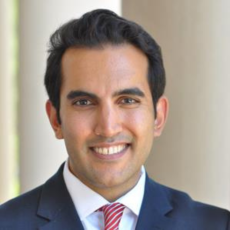
Want to understand how the private sector shapes international affairs? This dynamic session explored the evolving field of corporate diplomacy, highlighting how businesses are increasingly acting as diplomatic actors and the critical skills needed to navigate complex global environments. Peru Trevidi and Brandon Sloski from Meridian International Center shared their expertise, offering frameworks and practical insights for entrepreneurs, established companies, and ecosystem builders alike.
Outline
- Introduction of Speakers and Meridian International Center: Featuring Peru Trevidi (External Affairs and Corporate Affairs Practice Lead) and Brandon Sloski (Senior Director, Center for Corporate Diplomacy) from Meridian International Center, a 65-year-old 501c3 nonprofit based in Washington DC.
- Meridian's Mission and Work: Primarily implementing flagship public diplomacy programs for the US government, such as the International Visitor Leadership Program (IVLP). Meridian also serves as a center for multi-dimensional diplomacy, recognizing non-traditional actors like artists, athletes, mayors, governors, entrepreneurs, and corporate executives. Meridian is studiously neutral and nonpartisan.
- Evolution of Diplomacy: Discussion on how diplomacy has evolved beyond traditional government-to-government interactions (e.g., UN, diplomats in rooms) to include diverse actors and forms, such as subnational diplomacy (cities, states, governors, mayors), culture and sports diplomacy, and science and technology.
- The Rise of the Private Sector in Diplomacy: Exploration of the growing influence and role of the private sector in international affairs, citing the Edelman Trust Barometer Index which shows businesses are increasingly the most trusted institution. Companies are now expected to speak up on societal issues.
- Why Corporate Diplomacy Matters: Explanation of why entrepreneurs, investors, and companies at all stages should care about corporate diplomacy. It provides a framework to manage and understand all stakeholders (customers, regulators, government, buyers, etc.). Understanding this field offers a competitive edge, enabling access to finance, public-private partnerships, and government-funded opportunities. Leaders from major companies are actively shaping foreign policy from a corporate diplomacy lens.
- Private Sector as Government Advisors: The private sector often possesses more insights and deeper relationships in certain markets than governments, acting as crucial advisors and conduits. This engagement is even codified in law through the Catalyzing American Business Through Diplomacy Act (CABDA).
- Navigating Foreign Sensitive Markets: Identification of underappreciated factors when companies expand internationally, including Environmental, Social, and Governance (ESG) aspects. It requires understanding different equities at play and delivering wins for stakeholders across the table. Examples include land acquisition in India, investment expectations in the Middle East, and focusing on local needs beyond resource extraction in Latin America.
- Key Skills for Corporate Diplomacy: Emphasis on the importance of understanding public policy and administration for entrepreneurs. The ability to see around the corner and understand stakeholders' motivators, pains, and gains is crucial. The "superpower" is learning to think like a diplomat as a private sector leader.
- Meridian's Center for Corporate Diplomacy: Description of the center's work, including providing insights, tools, and experiences for partners through weekly briefings with officials, leading delegations, and offering training programs. They work with companies of all sizes.
- Case Study: NFL International Expansion: The NFL's need for assistance navigating new markets, cultural norms, and being good community partners serves as an example of even large companies utilizing corporate diplomacy.
- Interactive Stakeholder Empathy Map Exercise: Participants role-played as a company (Sentry Energy) planning a wind farm in Tanzania and analyzed the perspectives (think/feel, see, say, do, hear, pains/gains) of various stakeholders using an empathy map framework. Stakeholders included: Regional Governor, National Energy Regulator, Environmental NGO Director, Village Leader, Ministry of Commerce and Trade Official, and East Africa Trade and Investment Office.
Notable Quotes
- "think about corporate diplomacy as a framework to manage and understand all of your stakeholders, whoever it might be, your customers, your regulators, your local government, your federal government... That's kind of the whole theory of the change." - Peru Trevidi
- "It's about understanding the needs, the issues, the pain points, the drives, the motivators of the stakeholders that you're dealing with... How can you deliver upon those needs while at the same time delivering value to your business..." - Brandon Sloski
- "Learning to think like a diplomat, but doing so as a private sector leader, I think, is is that super power that I kind of hope that you take away with a little bit from today or think about today." - Brandon Sloski
Key Takeaways
- Corporate diplomacy is a vital framework for entrepreneurs and companies of all sizes to effectively manage and understand their diverse stakeholders.
- Success in operating across borders and in sensitive markets hinges on understanding the specific needs, motivations, and priorities of local stakeholders – government officials, community leaders, environmental groups, etc..
- Delivering mutual wins – identifying how your business objectives can align with and benefit the stakeholders across the table – is crucial for building cooperative relationships and navigating complex environments.
- The private sector is increasingly influential as a diplomatic actor and a source of valuable insights for governments.
- Developing the ability to "think like a diplomat" by actively seeking to understand stakeholder perspectives through tools like empathy mapping can provide a significant competitive advantage.
Resources Mentioned
- The Secret Traveler: A book about Coca-Cola.
- Edelman Trust Barometer Index: An index measuring trust in major institutions like governments, media, and businesses.
- Meridian International Center: A Washington DC-based nonprofit that works at the intersection of government, private sector, and foreign leaders.
- International Visitor Leadership Program (IVLP): A flagship public diplomacy exchange program run by Meridian for the US government.
- Catalyzing American Business Through Diplomacy Act (CABDA): A US law passed around 2019 encouraging better integration between government agencies and engagement with the private sector on diplomacy.
- Meridian Corporate Council: A group of corporate partners that work with Meridian and serve as advisors to government officials.
- Open Corporate Diplomacy Global Leaders Program: A training program offered by Meridian on various diplomacy-related skill sets.
- Empathy Map: A tool used in the session's exercise to analyze stakeholder perspectives (think/feel, see, say, do, hear, pains/gains).
Action Items
- Practice thinking like a diplomat by actively considering the perspectives, needs, and motivations of your stakeholders.
- Utilize frameworks like the Empathy Map to gain deeper insights into stakeholder viewpoints before engaging.
- Consider visiting Meridian International Center in Washington DC and exploring their events and programs related to corporate diplomacy.
- Connect with Peru Trevidi and Brandon Sloski to discuss corporate diplomacy further.