


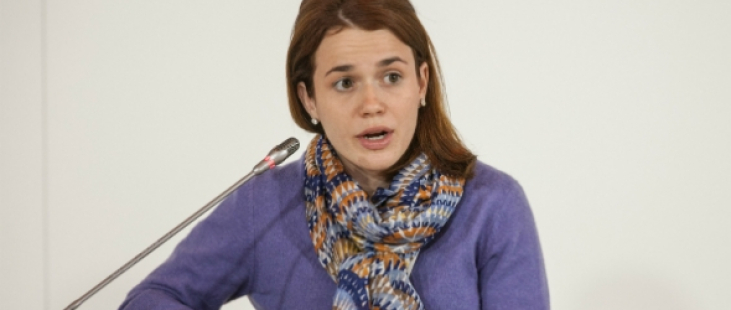


Pamella Goncalves is the head of Research and Mobilization at Endeavor Brazil, the official host organization behind GEW Brazil. In addition to coordinating studies on the Brazilian entrepreneurial ecosystem, Goncalves leads the GEW campaign in Brazil. During this year’s Global Entrepreneurship Congress in Moscow she accepted the Champion Catalyzer Award for Most Activities on behalf of GEW Brazil. The award recognizes the national campaign that holds the most activities and events during Global Entrepreneurship Week each year. During GEW 2013, Brazil topped the list with 4,127 activities.
With all eyes on Brazil this month for the World Cup, we decided to check in with Goncalves on the state of entrepreneurship in Brazil and what lies ahead for GEW 2014.
When and how did Endeavor first get involved in Global Entrepreneurship Week?
Right from the start we were quite interested in bringing GEW to Brazil. We were invited by the Kauffman Foundation to witness the 2007 movement in England with then Chancellor of the Exchequer Gordon Brown (who later became Prime Minister) and participate in the launch announcement with the first group of countries willing to take GEW global.
We saw GEW as a great opportunity to expand Endeavor´s model and impact. In 2008 started putting together our first national campaign with the most important entrepreneurs in the country going on TV to tell people to “Make it Happen”. Through GEW we managed to engage many important figures and successfully reached over 1 million people.
Why is Global Entrepreneurship Week important—overall and to Brazil specifically?
People and governments have only recently begun to recognize entrepreneurship as a powerful tool to drive social and economic development. Nevertheless, we believe its importance and impact are still underestimated in many countries. GEW has been essential in promoting entrepreneurship as an opportunity for millions of people and reinforcing the importance of fostering entrepreneurship in hundreds of countries. In Brazil, the last five years of GEW have verified the widespread impact of entrepreneurship and the popularization of entrepreneurship as a career path. It has taken discussions on entrepreneurship to remote areas of the country, inspiring people to pursue their own dreams. Furthermore, through its events GEW has enabled the instruction of millions of entrepreneurs on specific topics.
How does GEW support the work that you do throughout the year?
Endeavor Brazil aims to improve the entrepreneurial environment and increase the number of high-impact entrepreneurs in Brazil. GEW has grown to be an important part of our strategy in nurturing the entrepreneurial spirit in Brazil. It has also enabled Endeavor to strengthen its relationship with other organizations in the entrepreneurial ecosystem around the country, including the government and national media partners.
How has GEW grown in Brazil? What are you doing to build on its momentum?
Since starting in 2008, we have been able to reach over 2 million people with the help of 700 partners, which have organized over four thousand activities around Brazil. In order to do so, our strategy has consisted of building up governance and consolidating our relationship with media partners. Today, GEW Brazil has the support of 10 strong organizations in its National Board that are committed to helping GEW grow. Since 2012, we have also developed over 20 regional boards that help us put together local strategies for GEW campaigns. Meanwhile, the media has been fundamental to helping GEW access a larger portion of the population.
Are there challenges or barriers that you would like to overcome to increase participation?
Due to the size of our country we are challenged by a diverse geography and population. We would like GEW to be present in 800 of the over five thousand cities in the country (today we are present in approximately 500). It has been increasingly challenging to create campaigns to address people with such distinct profiles, living in such diverse conditions. It has been particularly difficult to engage those that do not yet see themselves as entrepreneurs or relate to the term, since in more remote areas it carries a negative cultural connotation.
What makes your GEW campaign unique?
We are quite proud of the governance we have been able to create and all the indicators and metrics we have put up in order to monitor and follow GEW around Brazil. Both of these elements have been essential in bringing together so many different partners and enabling the movement to grow way beyond our reach. A strong relationship with local media, which grants us huge national media coverage throughout the week has also been extremely important.
How do events such as the World Cup or the upcoming Olympics affect the creation of new enterprises in Brazil?
During the preparation for the events, all the investments made in infrastructure, transports, and tourism, amongst other sectors, have created numerous opportunities for entrepreneurs in these areas. During the events, the inflow of tourists is especially positive for the service sector. For entrepreneurs, these events act as a helpful stimulus for their innovations.
Who are the local stars in the Brazilian entrepreneurial ecosystem?
The local stars are the ones that have gained the most attention in recent years, in large part due to their ambitious moves. These would be the founders of AB Imbev, as well as the owners of Burger King and, more recently partners of the famous investor Warren Buffet in Heinz.
How would you characterize the entrepreneurial environment in Brazil? If you could change one thing to make it better, what would it be?
Despite a huge domestic market, a strong economy and a positive entrepreneurial culture, Brazil lags behind when it comes to its business environment. Whenever we ask entrepreneurs here about their major challenges, they usually point to three major challenges: access to a qualified workforce, access to capital and the regulatory and tax burden. The latter probably has the greatest impact on the growth of companies, since the current tax regime incentivizes entrepreneurs to stay small: both the amount of taxes and the complexity of the tax regime increase as companies grow.
What methods and mechanisms are you using to encourage entrepreneurship? What have been most effective and popular? What are your short-term and long-term goals?
Endeavor focuses on high-impact entrepreneurship. Our long-term goal in Brazil is to triple the number of high-growth companies in the country. In order to do so, our operational model is based on three central pillars:
(1) Identifying and fostering high-growth companies and providing them with a highly qualified network of mentors to help them grow. Today our portfolio is composed of over 60 companies and our goal is to help them grow on average 48 percent annually.
(2) Translating and communicating what we learn through our interaction with entrepreneurs to millions of people in the format of articles, eBooks, videos and courses – all available on our website. Today we provide our content to over 2.5 million entrepreneurs in the country; our plan is to reach 7 million in the next couple of years.
(3) Researching entrepreneurship and the entrepreneurial environment in the country and mobilizing organizations to act on these challenges. Today Brazil is ranked 116th according to the Doing Business Report. Our goal is to improve Brazil’s position by one third.
How do we: (1) Create more entrepreneurs? (2) Make those entrepreneurs more successful? (3) Help successful entrepreneurs grow larger and faster?
Despite a high interest in starting new ventures, few people in Brazil actually start their own companies. We believe the “recipe for success” involves: inspiring potential entrepreneurs to actually start their companies and instigating them to grow; providing the necessary education and access to a support network that can help those entrepreneurs; and removing eventual barriers to the entrepreneurial environment that might prevent them from growing.
How are you researching entrepreneurship? What are you most interested in finding out?
Our research explores entrepreneurs’ profiles, the entrepreneurship culture in Brazil, and analyzes the most important factors for the entrepreneurial environment. We are also conducting a study on entrepreneurship in universities, from both the university and the student perspectives. We will reach an important step next month with new research that analyzes and ranks entrepreneurship in 14 cities through a new methodology developed by Endeavor Brazil and Bain Company. We hope it helps us to better understand the policies of each region and to discover best practices to develop various entrepreneurial environments in Brazil.
What can other countries learn from the study of entrepreneurship in Brazil?
Probably one of our most interesting findings relates to the importance of high-growth entrepreneurs. In Brazil only 1.5 percent of the companies are responsible for 48.5 percent of all of the new jobs created in the country. This finding has reinforced for us the importance of focusing on high-growth companies as drivers of development.
What has been the most impactful public sector effort at unleashing entrepreneurs?
Most efforts in Brazil have focused on the formalizing of SMEs. In order to do so, the government has voted on a simplified and less burdensome tax regime for SMEs known as Simples. This measure has enabled the formalization of 6.4 million companies in Brazil over the last seven years.
What are the key differences in entrepreneurship in a developed nation and entrepreneurship in a developing country?
Some of the basic needs that are generally not a problem in developed countries, for instance infrastructure and highly qualified people, might pose a huge challenge and become an essential part of strategy for companies in developing countries.
What kind of tools are available in Brazil for a person with no experience whatsoever in business? Is there a role for government to play in the process?
Nowadays there are a lot of free local tools and content available on the Internet for entrepreneurs. Probably the most significant player is SEBRAE, a private entity supported by the government that provides education and services to SMEs all around the country. Local governments also have specific agencies that promote “doing business” in the region and that provide support to entrepreneurs, for instance helping them with the necessary paperwork and other services needed to install and start operating.
What kind of an impact has GEW had on the entrepreneurial ecosystem in Brazil?
GEW has helped highlight entrepreneurship in the media and contributed to three out of four Brazilians wanting to become entrepreneurs. It has also connected and strengthened bonds between organizations of the entrepreneurial ecosystem, guaranteeing that their initiatives collide and gain impact.