Speakers

Investment VP
DNX Ventures

General Manager
Alloy Partners
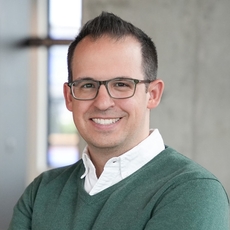
Managing Director
Alloy Partners

The venture studio is the latest popular model for supporting founders and creating innovative new businesses. Many entrepreneurs are increasingly asking whether venture studios are right for them, and investors are increasingly looking into them as part of their diversification strategies. Corporations and family offices are also looking to lean into venture studio firms to increase the likelihood of success to series A.
The rise of venture studios clearly reflects the ever-evolving landscape of startup creation. But what exactly is a venture studio, and how does it differ from accelerators and incubators?
Join this session to:
Discover the dynamics of venture studios, explore different operational models, and understand the venture-building process from experts in the field.
This session provided a deep dive into the world of venture studios, featuring insights from Lesa Mitchell, General Manager at Alloy Partners; Ryan Larcom, Managing Director at Alloy Partners; and Yuma Tanaka from DNX Ventures. The speakers discussed the core concept of venture studios, differentiating them from accelerators, exploring various models including those integrated with VC firms, partnered with corporations, or focused on specific sectors. They also shed light on the systematic process of "venture building," the strategic approach to finding and developing founders, and the financial aspects of running a studio. The discussion offered valuable perspectives on accelerating company creation and solving complex industry problems outside traditional corporate structures.
Outline
Introduction to Venture Studios
Defining what a venture studio is and its purpose in creating new companies.
Historical Context
Tracing the origins of venture studios, mentioning Idea Lab as an early example and High Alpha's innovation of integrating a venture fund.
Venture Studio Models:
VC Firm Integration: Discussing DNX Ventures' approach of starting with founders and leveraging a VC fund's network.
Corporate Partnerships: Alloy Partners' model of co-creating companies with large corporations to solve transformational problems, sometimes addressing "organ rejection" within the corporation. Highlighting the difficulty ("bending metal") of working with large corporations.
Sector/Ecosystem Focus: Exploring the model of focusing on problems across an entire industry vertical, like retail supply chain in Bentonville, Arkansas, to unlock cross-value chain opportunities.
Venture Building Process
Describing the "minus 5 to zero" phase of creating companies from scratch.
Systematic Approach: Compressing the typical 6-18 month founder journey into a systematic, repeatable 3-month process.
The 3-Month Cycle:
Month 1: Problem Framing (deep diving into problems with analysts and subject matter experts, using top-down and bottom-up lenses).
Month 2: Solutions Exploration (looking at feasibility, viability, and desirability from a full business model perspective).
Month 3: Business Model Development (fleshing out solutions, experimenting, testing assumptions, and preparing for pre-seed investment).
Problem Discovery: Utilizing methodologies like Jobs to Be Done to identify unmet needs that are valuable, widely held, and represent a priority job. Emphasizing large sample sizes and market validation to avoid overfitting for a single customer.
Founder Approach
Comparing the founder-first model (DNX Ventures), particularly relevant in less mature ecosystems with first-time founders, to the studio-hires model (Alloy Partners), which often recruits experienced former founders/CEOs. Discussing the advantages for hired founders (idea, first customer, funding, support).
Importance of Ecosystem & Network
Building support systems, including leveraging previous company leaders as mentors for new ventures, to prevent founders from wasting time on solvable problems and combat the loneliness of entrepreneurship.
Funding and Capital
Discussing the need for significant capital to cover both company investments and operational expenses (headcount burn rate). Estimating a minimum viable studio around $20 million for B2B SaaS in the US. Mentioning initial investment sizes per company (e.g., $1M at Alloy, $350K initially at DNx).
Success Metrics
Defining success based on the ability of spun-out companies to reach revenue-positive or raise their next round of funding (venture-backable).
Investment Thesis & Exit
Briefly touching on typical focus areas (venture-backable concepts like SaaS, AI, tech-enabled services) and potential exit strategies (M&A, IPO), while noting the focus is primarily on early-stage growth.
Notable Quotes
"In a venture studio model, we are creating companies from scratch."
"What a venture studio does is compress that [entrepreneurial exploration] into a systematic and repeatable process that we can do in a three-month turn."
"Our conclusion is that the founder is by far the most important thing. That is unchangeable."
"Entrepreneurship is lonely, right? And the opportunity for an entrepreneur to say I have friends who are in this with me... is unique."
Key Takeaways
Venture studios are fundamentally about creating new companies, taking them from an early idea stage (minus 5 to zero) to a point ready for significant external investment or profitability.
The "venture-building" process is highly structured and accelerated, aiming to achieve in about three months what an independent entrepreneur might take over a year to figure out.
Different venture studio models exist, including those tied to VC firms, corporate partners, or specific industry sectors, each with unique approaches to problem identification and founder engagement.
Finding and supporting founders is critical, whether by starting with a founder or hiring experienced entrepreneurs to lead studio-built concepts.
A supportive ecosystem and network of mentors/peers are essential for helping early-stage studio companies navigate challenges efficiently and avoid wasting precious capital.
Resources Mentioned
Clayton Christensen's work (mentioned in relation to transformational problems and potentially Innovator's Dilemma).
Jobs to Be Done (Framework used for problem discovery).
Action Items
The speakers will be available outside for questions after the session concluded.