

Speakers
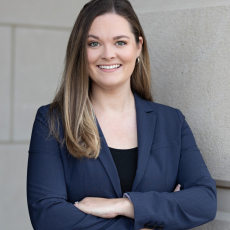
VP of Innovation & Entrepreneurship
TechPoint

Co-founder
gener8tor

Cofounder
gener8tor

In this fireside chat, gener8tor co-founders Joe Kirgues and Troy Vosseller share the journey of building one of America’s leading accelerator platforms and how its model has evolved across borders—from the Midwest to Asia, Europe, and the Middle East. They will reflect on what translates across ecosystems when it comes to venture capital, accelerators and startup support—and what doesn’t.
Drawing from gener8tor’s international expansion, Joe and Troy offer candid lessons on adapting to local contexts, building trust with stakeholders and navigating the realities of scaling globally alongside Chelsea Linder, VP of Innovation & Entrepreneurship at TechPoint.
This session is ideal for investors, policymakers and ecosystem leaders seeking a grounded perspective on growing innovation ecosystems worldwide.
The Generator Story - Building Ecosystems Across the World
Dive into the incredible journey of Generator, from a "love letter to home" in Wisconsin to a global force in entrepreneurship. Hear directly from co-founders Joe Kirus and Troy as they unpack their unique approach to accelerating startups, the lessons learned from scaling across diverse markets, and how they are redefining what it means to invest in local and international innovation.
Brief Summary
Generator began in 2012 in Wisconsin as a "love letter to home," seeking to engage the community in investing in itself by providing a tool for job, wealth, and leadership creation for the next generation of founders. Co-founders Joe Kirus and Troy developed a unique, highly concierge approach to their accelerator programs, initially working with small cohorts of five to six companies. This method, coupled with a focus on having founders pitch numerous times, helped them realize the power of supporting founders who might otherwise self-exclude. Generator prioritizes quality and outcomes over volume and strategically expands into emerging markets and overlooked cities rather than focusing solely on major tech hubs. They emphasize the importance of locals investing in locals and have successfully applied this model both nationally and internationally, developing new programs like the Soft Landing Pad to attract global talent to local communities.
Outline
• Origins of Generator: Founded in 2012 in Wisconsin by Joe Kirus and Troy as a way to engage the community in investing in its future founders. Started scrappy, initially working with 12 cohorts of five to six companies.
• Accelerator Philosophy:
◦ Concierge Approach: Highly personalized support tailored to each startup's specific needs, like helping a shopper navigate a store. Focused on small cohorts (typically five startups) to maximize attention and resources per company.
◦ Emphasis on Pitching: Made founders pitch 50-60 times, highlighting the power of persistence and never self-defeating.
◦ Quality Over Volume: Incentivized by focusing deeply on a few companies rather than maximizing client numbers, especially in contrast to some grant-funded programs. Success measured by outcomes like funding raised, jobs created, and company valuations.
• Growth and Expansion:
◦ Started in Madison and Milwaukee based on where the founders lived and saw need.
◦ First four+ years were solely in Wisconsin.
◦ Expanded to similarly sized cities (areas 11-50) outside major tech hubs, including Minneapolis/St. Paul, Indianapolis, Cincinnati, Omaha, Birmingham, San Antonio, and Oklahoma City.
◦ Strategy is to focus on emerging markets and overlooked places.
◦ Growth involves constantly updating infrastructure (three months building, three months growing into, three months growing past, three months ripping out).
• Partnerships and Ecosystem Building:
◦ Success attributed to strong partnerships and collaboration with local stakeholders.
◦ Example: Partnership in Indiana with the IDC (Indiana Economic Development Corporation), Techpoint, and Butler University for the Butler Accelerator.
◦ Public-Private Partnership Model: IDC's model of state funding requiring local matching funds from corporations, chambers, universities, etc., is seen as brilliant for ensuring local buy-in.
◦ Land and expand strategy: Starting with one program in a market and growing presence (e.g., Alabama). More density of support systems is seen as a good thing.
• Challenges and Lessons Learned:
◦ Rapid growth requires constant infrastructure changes, which can be challenging for the team to foresee and adapt to.
◦ Need for better communication, both internally and externally, to share successes and lessons.
◦ The accelerator market has matured: the challenge shifted from explaining what an accelerator is to demonstrating how Generator is different from others already tried.
◦ Founders should "eat their own dog food" and apply the advice they give startups to their own operations.
• International Expansion (Luxembourg):
◦ Launched first international program in Luxembourg in 2021.
◦ Similar dynamics to Indiana: Luxembourg is a secondary market, uses size as an advantage, views security through connectivity, and is accountable on metrics. Willing to work with a vendor outside a major European hub.
◦ Challenges: Regulatory difficulty outside the American legal/banking system was eye-opening and created material issues for founders (e.g., cost of setting up bank accounts).
◦ Secondary market strategy applies well internationally.
◦ Playbook is about 80% the same globally, with 20% variation. Generator focuses on being the expert in running accelerators, while partners bring expertise in their specific industries or regions.
• Building Trust and Scaling:
◦ Building trust involves approaching people with respect and demonstrating a credible track record of helping communities.
◦ Overcoming the perception based on negative experiences with other accelerators.
◦ Critique of "Importing" Talent: Questions the model of hiring experts from major hubs or bringing non-local startups, arguing it often lacks deep value transfer to the local community. Generator focuses on local investing in locals.
◦ Finding the "Goldilocks" balance between being overly parochial and overly global – leveraging a national/international network while serving local startups.
• Soft Landing Pad Program:
◦ A new program designed to attract global founders to local communities to create jobs in both places.
◦ Partners with community colleges/universities to provide H-1B visas through employment as an EIR or adjunct.
◦ Allows communities to access a global applicant pool beyond their local founder base.
◦ Model being piloted in Wisconsin and Nevada (Electrify Nevada, focused on lithium ecosystem).
◦ International entrepreneurs with visas may have more "stickiness" to a community than domestic recruits.
• Measuring Impact:
◦ Tracks capital raised (billions by combined graduates), economic growth per dollar invested, jobs created, revenue, and demographic statistics.
◦ Developing new methods to measure impact for both the host community and the entrepreneur's home community with the Soft Landing Pad program.
◦ Generator is among the few, potentially only, accelerators publishing all three: financial, economic development, and demographic statistics.
• Ecosystem Building Policies:
◦ Public-Private Matching Funds: Highly recommended model where state funds require local matching.
◦ Aligning State Investments: Policy should ensure state balance sheets, pension funds, etc., are aligned with local economic development goals, reinvesting locally while maintaining fiduciary duty. Calls out the "no good deals here" argument as "b*******".
◦ Convening Power: Elected officials and leaders can use their power to bring influential people together to encourage private investment, which is free and effective. Example: Governor convening CEOs for SSBCI matching funds.
◦ Accountability of Dollars: Differentiates between true grants and contracts for services; insists communities should expect outcomes and hold programs accountable.
• International Recruitment Policy: On top of Troy's points, accountability of dollars is key. Need to avoid focusing on personal relationships over measurable outcomes.
Notable Quotes
• "The greater risk wasn't that we would fail. It would it was that we would never try and we wanted to get caught trying."
• "We made everyone go out and pitch about 50 to 60 times... And it really showed us the power of never self-defeat."
• "We're very proud to focus on areas 11 through 50, if you will... Places outside of the beaten path that are not those major tech hubs."
• "How do we make sure from a policy perspective, from a executive branch perspective even, that the left hand and the right hand are aligned and and doing so can be consistent with fiduciary duty?"
Key Takeaways
• Embrace the "Concierge" Model & Quality over Quantity: Deep, personalized support for a smaller number of startups yields better outcomes than high-volume programs. Focusing on quality builds a stronger brand and delivers greater impact per dollar invested.
• Practice Makes Perfect (Especially Pitching): Repeated, high-volume practice in core skills like pitching helps founders overcome self-doubt and exclusion, enabling them to compete effectively for capital, customers, and talent.
• Strategic Expansion Beyond the Beaten Path: Significant opportunity exists in "secondary" markets (cities ranked 11-50 in the US, or similarly sized global cities) often overlooked by others. Success in these areas can be achieved through a focus on local investment and tailored partnerships.
• Policy Matters for Ecosystem Health: Governments can significantly impact ecosystem growth through smart policies like requiring public-private matching funds, aligning state investment vehicles with local economic goals, and utilizing the free power of convening key stakeholders.
• Attracting Global Talent with "Soft Landing Pads": Programs that offer visas and structured support can effectively attract top international entrepreneurs to specific communities, particularly for building specialized industry clusters, creating valuable "stickiness" and driving both local and global job creation.
Resources Mentioned
• (Book) The Warren Buffett Way: Mentioned for lessons on patience and taking a multi-decade view.
• (Book) Biography of Picasso: Mentioned as a currently interesting read.
• (Note: EOS was mentioned in passing but not as a recommended resource).
Action Items
• Generator is publishing their first ever annual report this year.
• Generator is actively working to measure the dual impact (host community and home community) for the new Soft Landing Pad program.
• The Soft Landing Pad program is kicking off in Wisconsin in partnership with the Wisconsin Economic Development Corporation.
• Explore opportunities for effective external communication to share successes and lessons learned more broadly.