


GBAN a GEN Invest Program
One of the most valuable parts of bringing together GEN's Global Business Angels Network (GBAN) board is the chance to hear how angel investing is evolving across very different parts of the world at the same time. At a recent board meeting, members shared on-the-ground updates from their regions: there's a genuine desire to keep this knowledge flowing throughout the world.
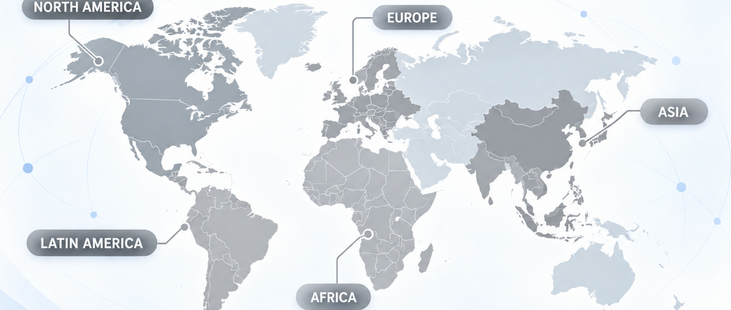
Here's a look at what's happening across Europe, North America, Asia, Africa and Latin America right now.
Europe: Selma Prodanovic, EBAN
Reports on a strong showing at the EBAN Congress, held in Vilnius in June, called out how quickly Baltic countries are building unicorn-track companies and a mature investment ecosystem. Two themes stood out from the region:
- Deep tech, defense, and space are now front and center. Topics that were essentially off-limits in European entrepreneurship circles just a few years ago, especially defense, are now leading conversations, particularly in countries bordering Russia.
- A new pan-European startup structure is taking shape. The EU is advancing "EU Inc," a proposed 28th legal regime designed to let entrepreneurs found a company across the EU without navigating each country's individual legal and tax requirements.
EBAN also recently launched the Peter Cowley Award, created in memory of the longtime investor trailblazer, which recognizes not just the quality and volume of an investor's deals but also their philanthropic contribution to their local ecosystem. EBAN's flagship European Angel Investment Summit will be held this year in Luxembourg on October 14–15.
North America: Linda Smith, Angel Capital Association (ACA)
Early findings from ACA's annual data report, following ACA's annual conference in May, highlight three notable shifts in the U.S. angel landscape:
- Angels are getting younger. A new wave of investors, many now in their early 50s rather than late 50s/early 60s, is entering the space, in part fueled by liquidity events like the SpaceX IPO, which created a significant number of new millionaires, including employees well beyond the executive ranks.
- Exit timelines are stretching. Average holding periods have moved from roughly 6–7 years to 8–8.5 years, partly a reflection of heavy biotech investment between 2020–2025, a sector where clinical trial timelines naturally extend the road to exit.
- Funds are gaining ground on individual investing. More angel groups are shifting toward fund structures, where a dedicated management team (often 9–15 people) handles the heavy lifting, freeing up time for angels who don't want to manage portfolio companies directly.
Another exciting resource that is available through ACA's is "Angel Group in a Box" a step-by-step framework for building and sustaining an angel group, from formation through funding and deal flow, it can be a potential resource other regions could adapt.
Asia: Padmaja Ruparel, Indian Angel Network
Indian Angel Network is in transition, with strong momentum in some markets and short-term caution in others:
- Cross-border angel activity is accelerating notably Sri Lanka–India, Hong Kong–India, and growing interest from Malaysia and Singapore into Sri Lanka.
- Bangladesh and Nepal have seen a slowdown in angel activity over the past months following elections and new government regimes, as investors wait for new FDI rules to settle, though small investments in Bangladesh have resumed since May.
- Middle East investors have been active across Asia, with entrepreneurs and family offices from Dubai, Abu Dhabi, and Kuwait seeking not just returns but an "anchor" presence in large markets like India.
- India is making a major push into deep tech and sovereign technology semiconductors, space tech, and a national quantum mission are all new in just the last two years. The Indian government has committed $12 billion in matching capital for early-stage investment, and roughly 125,000 startups are now registered for a three-year tax exemption on profits, both of which are drawing more angels into the space.
- At a deep tech showcase in Nice, France (June 13–14), roughly 120 companies were featured, and it is estimated that close to 90% had received angel investment in their first round.
- India has also moved largely toward an angel fund structure, now over 300 funds, partly in response to regulatory pressure on direct investing. Sri Lanka is now exploring a similar model, and they’ve noted interest from Doha in setting up comparable structures to bring family capital into early-stage deals.
- Across the region, angel investing is increasingly being treated as its own asset class, with wealth managers beginning to introduce it to high-net-worth and ultra-high-net-worth clients.
Africa: Fadilah Tchoumba, ABAN
Findings from ABAN's most recent annual survey, which recorded $4.5 million in disclosed angel investment were deployed across the continent:
- Fintech remains the leading sector, with climate tech and agritech/food security both growing quickly in terms of both financial and non-financial support.
- The survey report’s foreword was written by Mr. Mossadeck Bally, Founder and President of Azalaï Group, a highly respected African entrepreneur and leading angel investor.
- ABAN launched the Catalytic Africa x Timbuktu Initiative, a new matching fund supported by UNDP, which has already closed two deals, with Zambia leading early activity.
- ABAN is in active discussions with the African Continental Free Trade Area (AfCFTA) about partnering to expand angel investor reach across all 54 member countries, including potential support from AfCFTA's adjustment fund for tech-enabled SMEs working on cross-border trade.
- On the sidelines of Biashara, a recent gathering in Lomé, Togo, convened the local business angel network alongside institutional and government partners to discuss ways to expand engagement, promote youth employment, and drive economic growth.
- In North Africa, Egypt and especially Algeria are emerging as innovation hotspots, drawing growing investor attention.
- The new angel network setup framework documentation is available upon request for groups interested in establishing and sustaining angel networks across the continent. Interested individuals and groups may contact secretariat@abanangels.org to request access.
- The 12th edition of the Africa Early Stage Investor Summit (https://africainvestorsummit.com) will take place in Cape Town from 24–26 November, marking the start of Cape Town Investor Week.
It was noted that the African ecosystem feels more connected than ever, with stronger collaboration between private and public sector players over just the past few months.
LAC: Israel Pons, Angels Nest
- These developments come on from the GET Forum in Quito, Ecuador (October 5 to 7), co-organized by IDB Group, GEN, AEI, and the Government of Ecuador. (https://www.genglobal.org/get-forum )
- The Uruguay Private Capital Forum 2026 takes place on October 8 at LATU Innovation Park in Montevideo, organized by Uruguay XXI, ANII, Uruguay Innova, and URUCAP. The event brings together international investors, fund managers, family offices, policymakers, and entrepreneurs, with discussions focused on open finance, fintech development, and regulatory sandbox frameworks currently advancing in Uruguay, a country positioning itself as a stable gateway for investment into Latin America. (https://luma.com/9gtiyimf)
- The LAC region is one where early-stage capital is in high demand but historically hard to access, with 66% of LAC venture capital flowing to late and growth-stage companies. Angels remain a critical piece of the puzzle, and the infrastructure to close that gap is taking shape.
- Angels Nest LATAM now counts 400+ members across the region, a sign of how quickly the angel community has grown in Latin America even as institutional capital has tilted later-stage.
- URUCAP has launched a new Angel Investors Chapter in Uruguay. Despite the country's growing base of experienced entrepreneurs and successful exits, angel investing there has remained fragmented, with limited co-investment, syndication, or knowledge sharing. The new chapter creates a structured platform for education, curated deal flow, peer learning, and ecosystem collaboration, open to URUCAP members who are active or aspiring angel investors.
The bigger takeaway
Across every region, the same shift is underway. Angel investing is becoming more structured, more connected, and more recognized as a serious asset class. New fund models are emerging, cross-border deal flow is accelerating, and governments are starting to show up as real partners rather than just observers.
What made this board conversation stand out was less the individual updates and more what the updates are forming into; a global ecosystem that is increasingly talking to itself. That is exactly what GBAN was built for, and there is clearly more to share.
Stay tuned for more regional spotlights as we continue to highlight the people and networks powering early-stage investing around the world.