



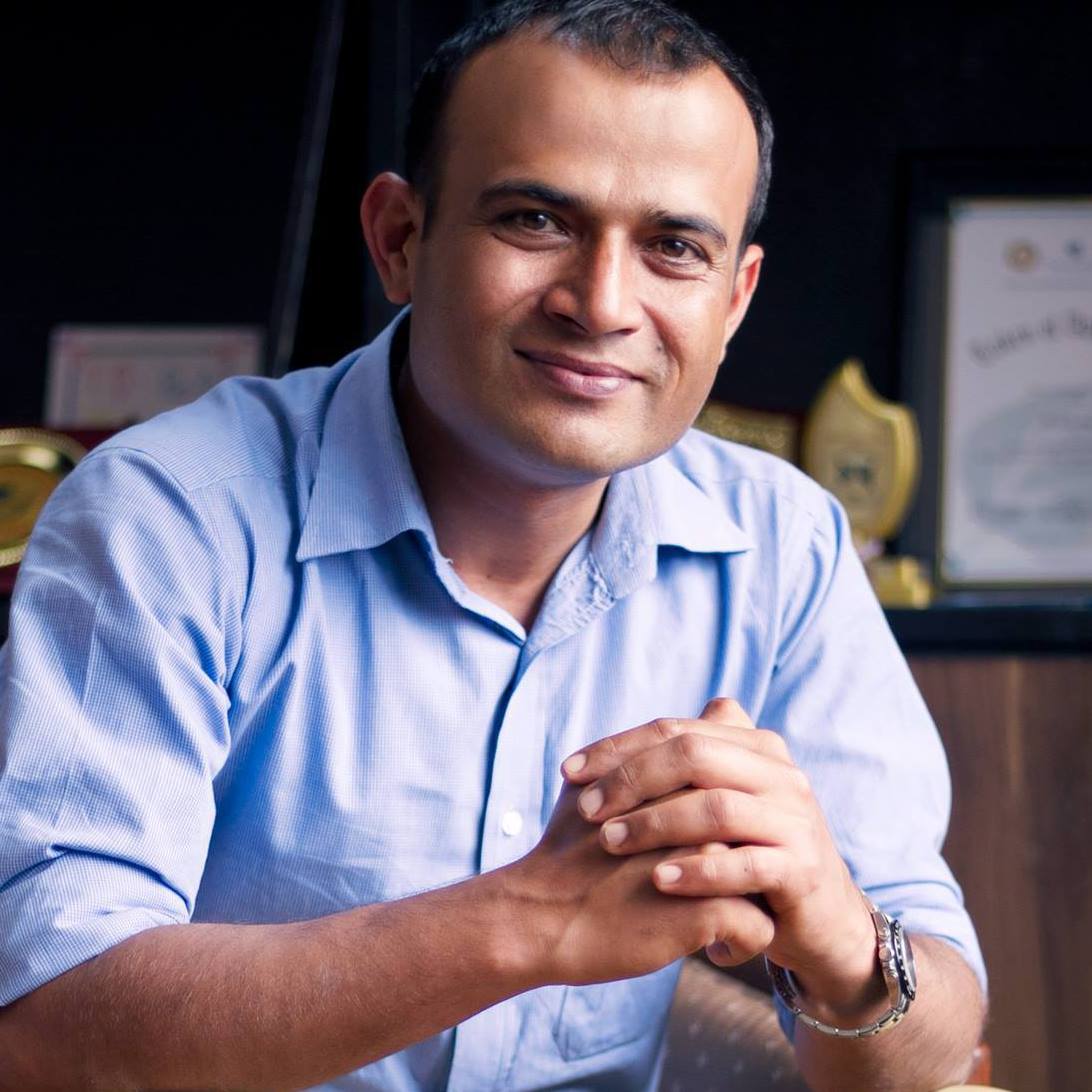


Startup Account #1: Govinda Siwakoti
(Co-Founder, Onion Films)
Please tell us about your company, Onion films.
The three of us were working at a Kathmandu-based economic think tank that also worked to promote entrepreneurship. We shared a common love for films. Thus while working to promote entrepreneurship, we also decided to start our own business. Onion films began operations from December, 2013 and currently has 9 employees.
How did you come up with the idea of Onion films?
We all had a realization that Nepal really lags behind in making short films. There was little space for platforms for networking amongst us likeminded people as well. So in order to remedy these problems, we came up with Onion films.
Please tell us about your initial investments.
Onion films began with an initial investment of 15 rupees. That is mainly because we came up with the idea of Onion Films during our tea-time!
How does Onion films stand out from the rest of the film making companies?
We do have a lot of film making companies in the country. Through Onion films, we try to promote local issues of Nepal despite them being low profit making projects. Also unlike other companies, we conduct intense research works before initiating any client-based assignments so that we can add value to their product. Besides this, we also conduct a film making workshop from time to time known as Young Cuts, where we try to promote the spirit of film making among youth.
What primary message does Onion films want to disseminate to society?
Onion films wants to promote the spirit of film making along with advocating for good entrepreneurial practices. Also, we want to shed light on areas such as accountability and awareness on varied social issues.
Please tell us little more about Young Cuts.
Young Cuts is a 20 days long film making workshop where young people from different backgrounds come together to pursue trainings and skills on film making. We initiated this workshop so that we can produce young filmmakers who are more inclined towards making issue-based short films. We regard it as our contribution towards film making as well as to Nepalese society.
So far, graduates of this workshop have been able to engage themselves in film making projects and other associated media.
Why do you think Nepali film sector is not being able to produce films that match the global level?
We don’t really need to imitate all that others do. The main problem with us lies in storytelling. We have not been able to develop our expertise in storytelling and hence cannot attract audiences as well as global cinema can. Also, the revenue collected from ticket fare is little and entertainment policies are not very supportive towards our film sector promotion.
What challenges did you go through during your initial days?
Creativity and updated technology are of utmost importance in our field. So in our initial days, getting access to such technology was very difficult. Clients are sensitive toward the kind of equipment we own and use for work. Apart from this, it was very hard to pitch-in the same kind of enthusiasm in everyone else working on the project.
Another major challenge is the continual comparison of our work with the Indian film sector.
Do you think events like the Global Entrepreneurship Week add value to your work?
I think events like this help spreads entrepreneurial networks. It is also useful in disseminating information about various new start-ups and their products.
Do you have any suggestions for aspiring entrepreneurs?
Vision is what matters the most for every entrepreneur. Besides that, the whole idea of starting anything new should be backed up by ample research rather than just diving into it. Also, any enterprise only moves forward with effective networking as ultimately, we are each other’s consumers.