


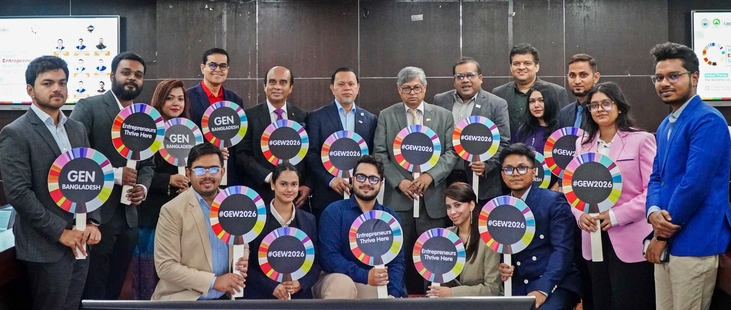



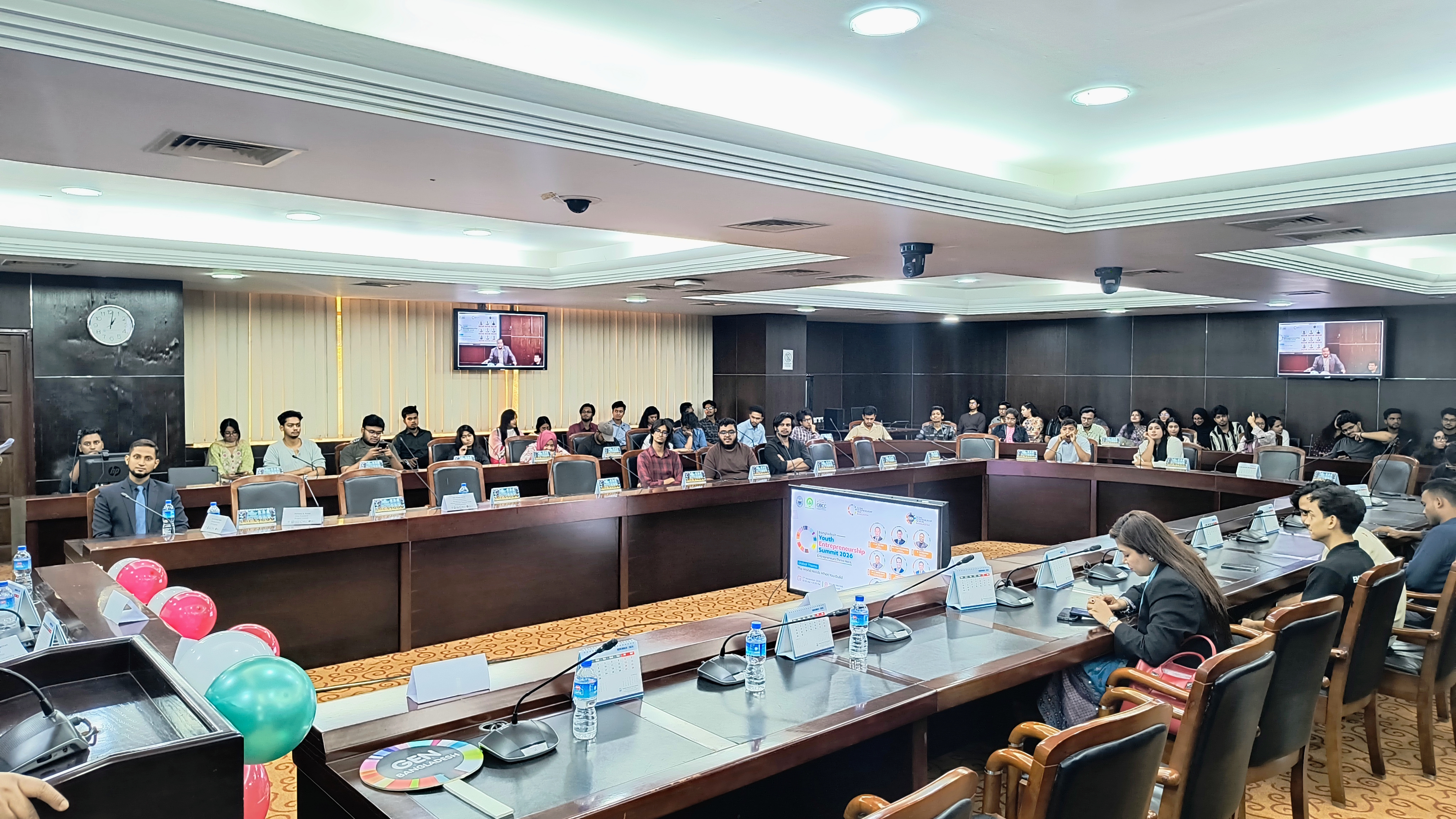
Dhaka, November 17, 2026: In an era of rapid technological transformation and changing employment opportunities, entrepreneurship is increasingly becoming an essential pathway for economic growth, innovation and job creation. Emphasizing this vision, North South University (NSU) hosted the Bangladesh Youth Entrepreneurship Summit 2026 on November 17 at its Syndicate Hall, bringing together prominent university leaders, entrepreneurs, industry professionals and aspiring young innovators.
Organized in celebration of Global Entrepreneurship Week (GEW) 2026, the summit was held under the global theme "The World Needs What You Build." It provided a platform for meaningful discussions on developing entrepreneurial mindsets, strengthening startup ecosystems, leveraging Artificial Intelligence (AI) and encouraging young people to transform their ideas into sustainable ventures.
Global Entrepreneurship: A Platform for Young Innovators
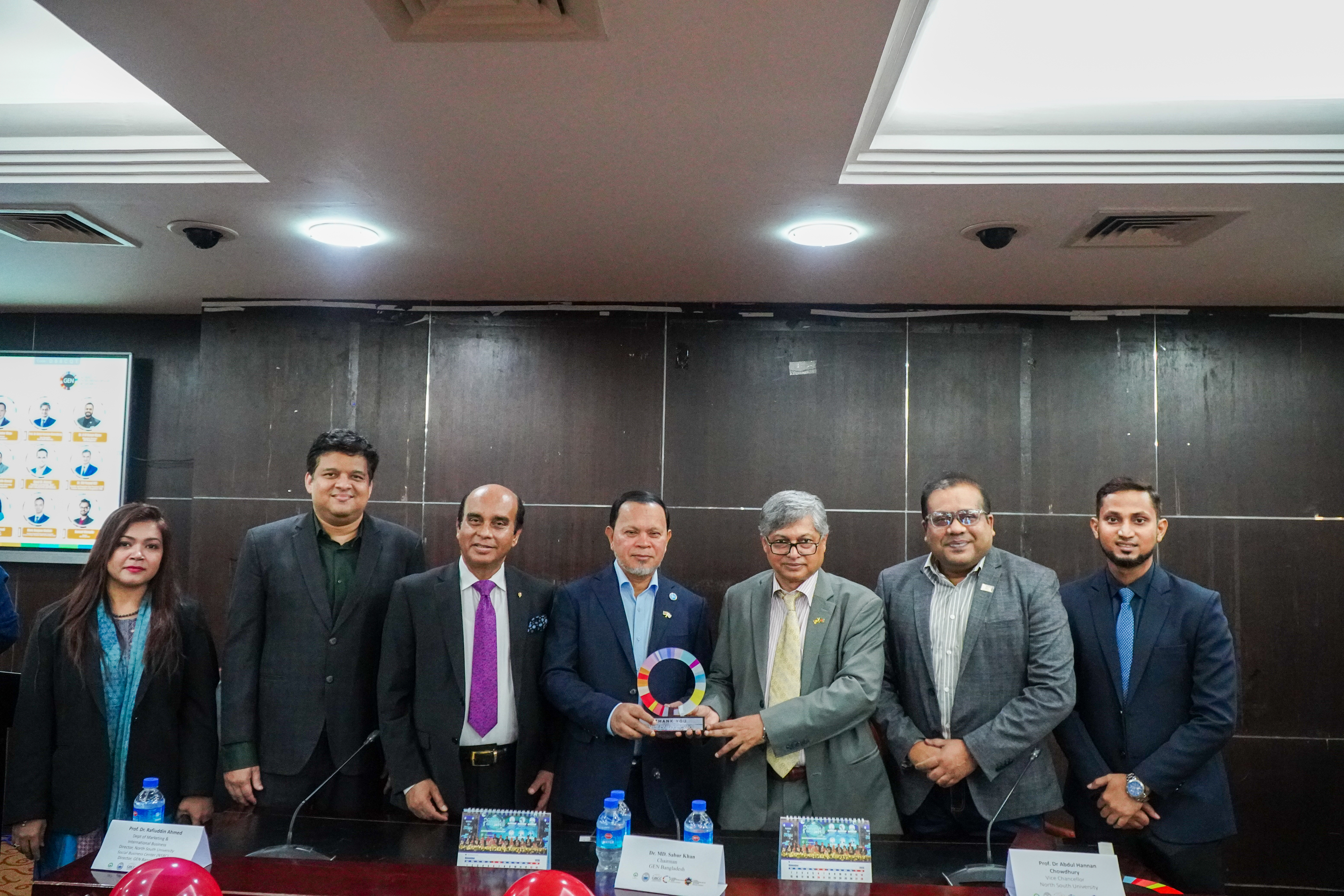
In his keynote address, Dr. Md. Sabur Khan, Chairman of GEN Bangladesh, highlighted the importance of developing an entrepreneurial mindset among young people. He introduced the Global Entrepreneurship Network (GEN) as an international platform connecting entrepreneurial communities across more than 200 countries.
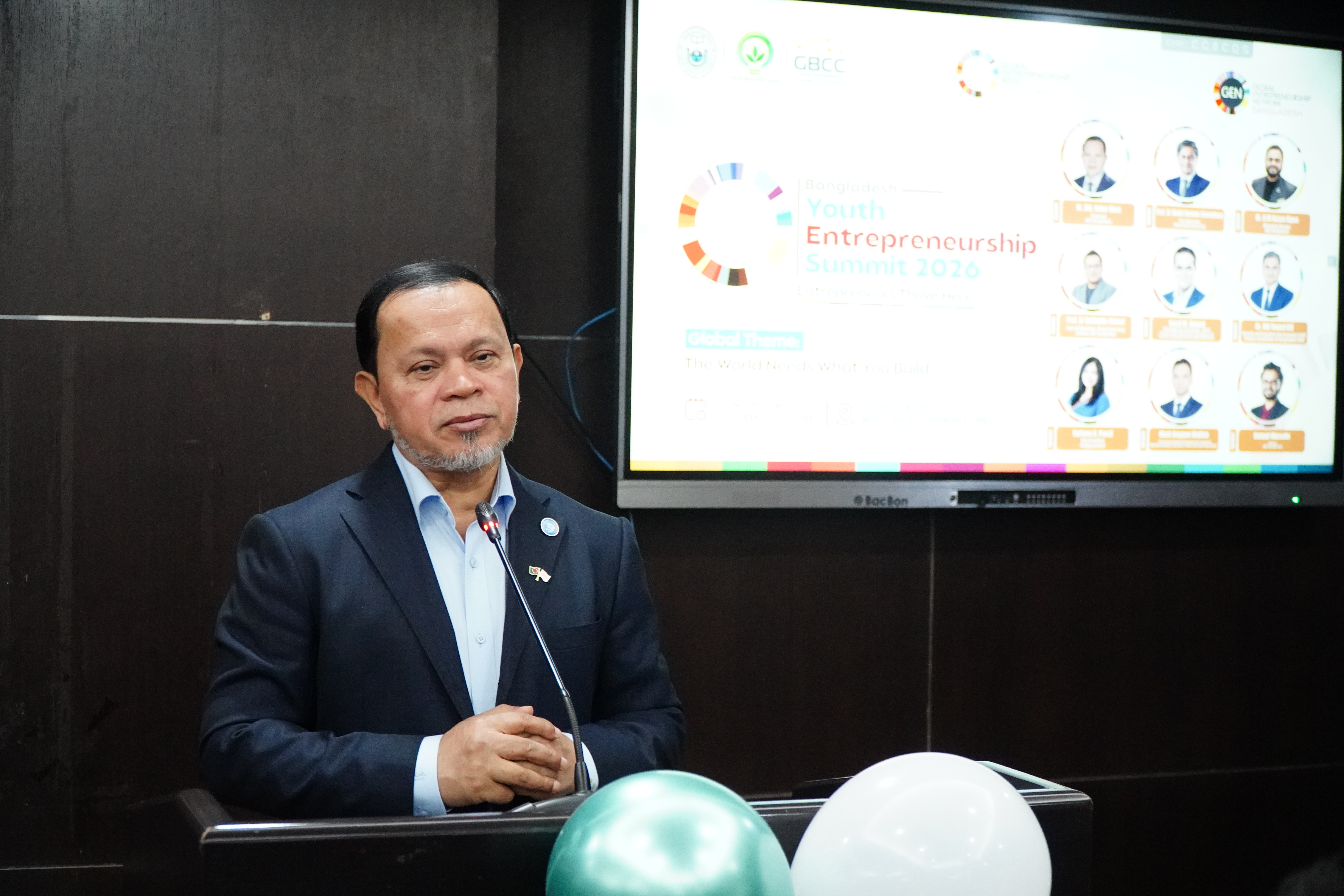
He emphasized that entrepreneurship is no longer limited by traditional business structures, large teams or significant initial investments. With the growing accessibility of Artificial Intelligence and digital technologies, young individuals now have unprecedented opportunities to research business ideas, conduct market analysis, understand financial projections and explore competitive landscapes.
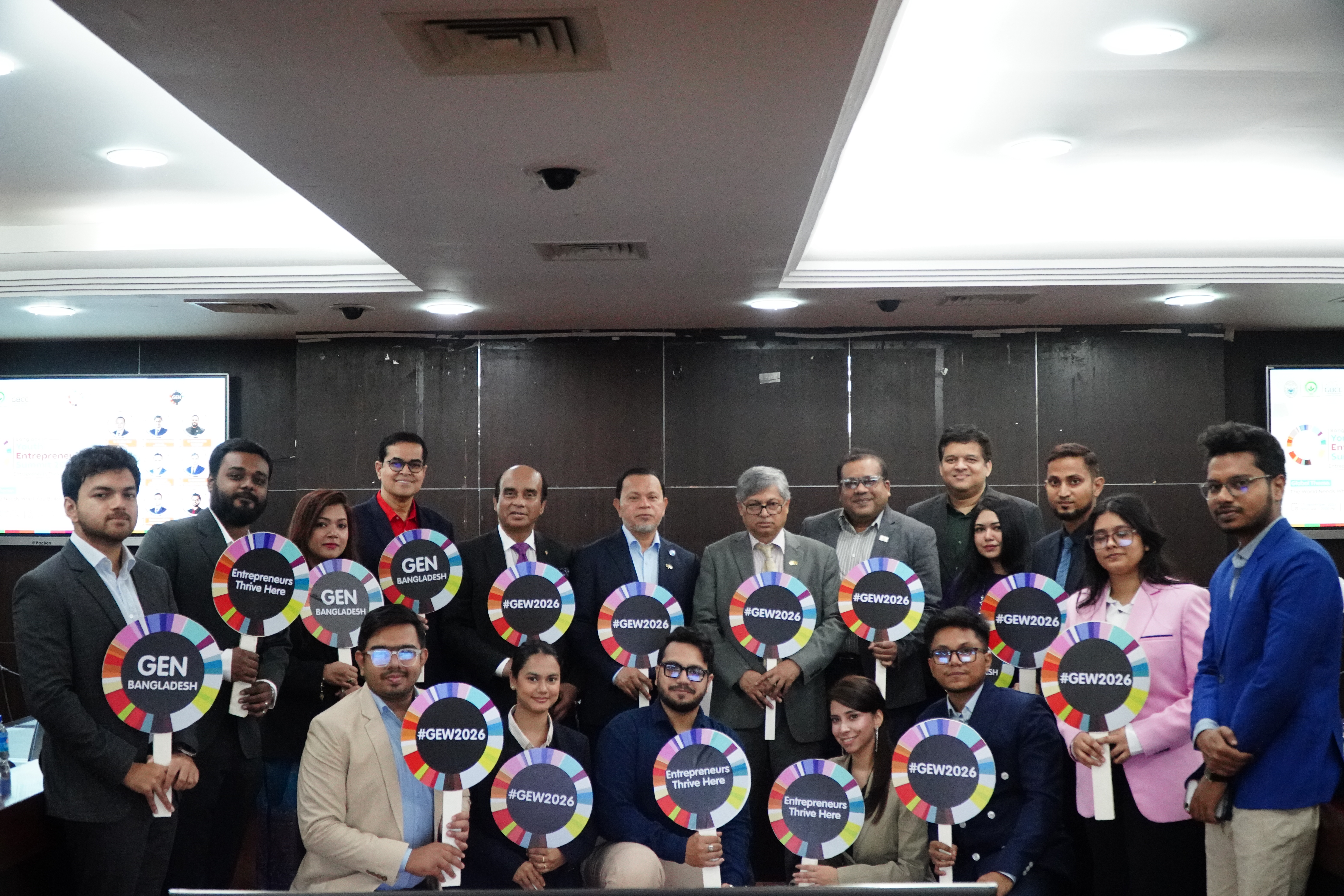
Dr. Khan particularly encouraged students to embrace emerging technologies, remain aware of global trends and explore opportunities to become independent entrepreneurs. He also highlighted the importance of collaboration between North South University and GEN Bangladesh in strengthening the university's entrepreneurial ecosystem through global networks, mentorship, investors and other entrepreneurial resources.
He further challenged the conventional perception that everyone becoming an entrepreneur would leave businesses without employees. Instead, he explained that more entrepreneurs ultimately mean more businesses, greater economic activity and new employment opportunities.
Universities Must Become Catalysts for Entrepreneurship
Mr. Benajir Ahmed, Member & Former Chairman, Board of Trustees, North South University, emphasized the importance of transforming educated graduates into entrepreneurs rather than preparing them exclusively for traditional employment.
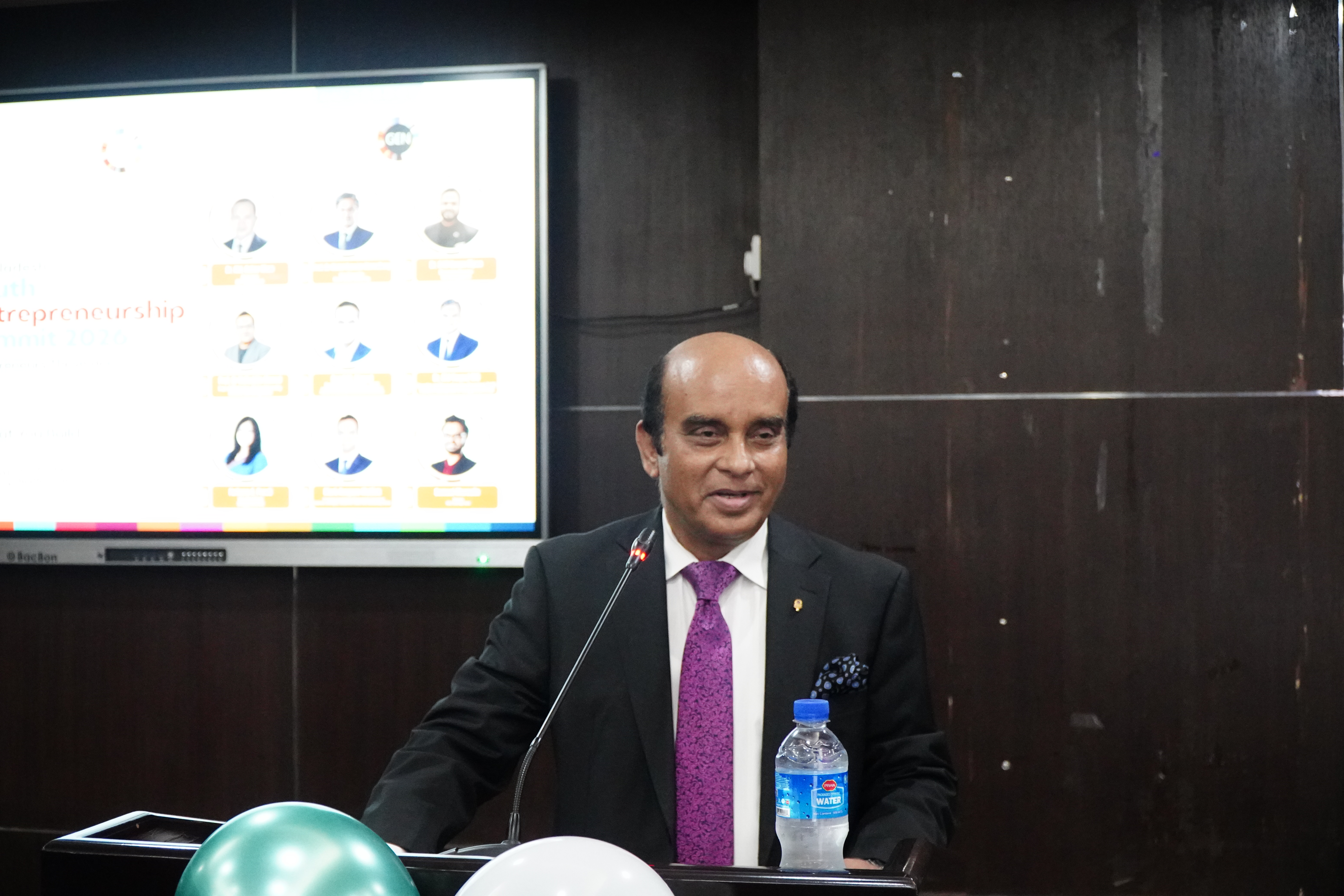
Sharing North South University's experience, he highlighted its initiatives to support early-stage startups through seed funding, institutional guidance and advisory support. He noted that not every startup may achieve its intended objectives, but even a proportion of successful ventures can generate meaningful employment opportunities for other graduates.
He also stressed that universities should nurture creativity, innovation and entrepreneurial ideas alongside academic knowledge.
Professor Dr. Abdul Hannan Chowdhury, Vice Chancellor of North South University, highlighted the need to move beyond conventional, theory-based education towards practical skills, technological understanding, and entrepreneurship-oriented learning.
He emphasized that graduates should not only prepare themselves to secure employment but also develop the capacity to create employment for others. According to him, Artificial Intelligence, technological advancement, and global connectivity are creating new opportunities for young people to build businesses from anywhere in the world.
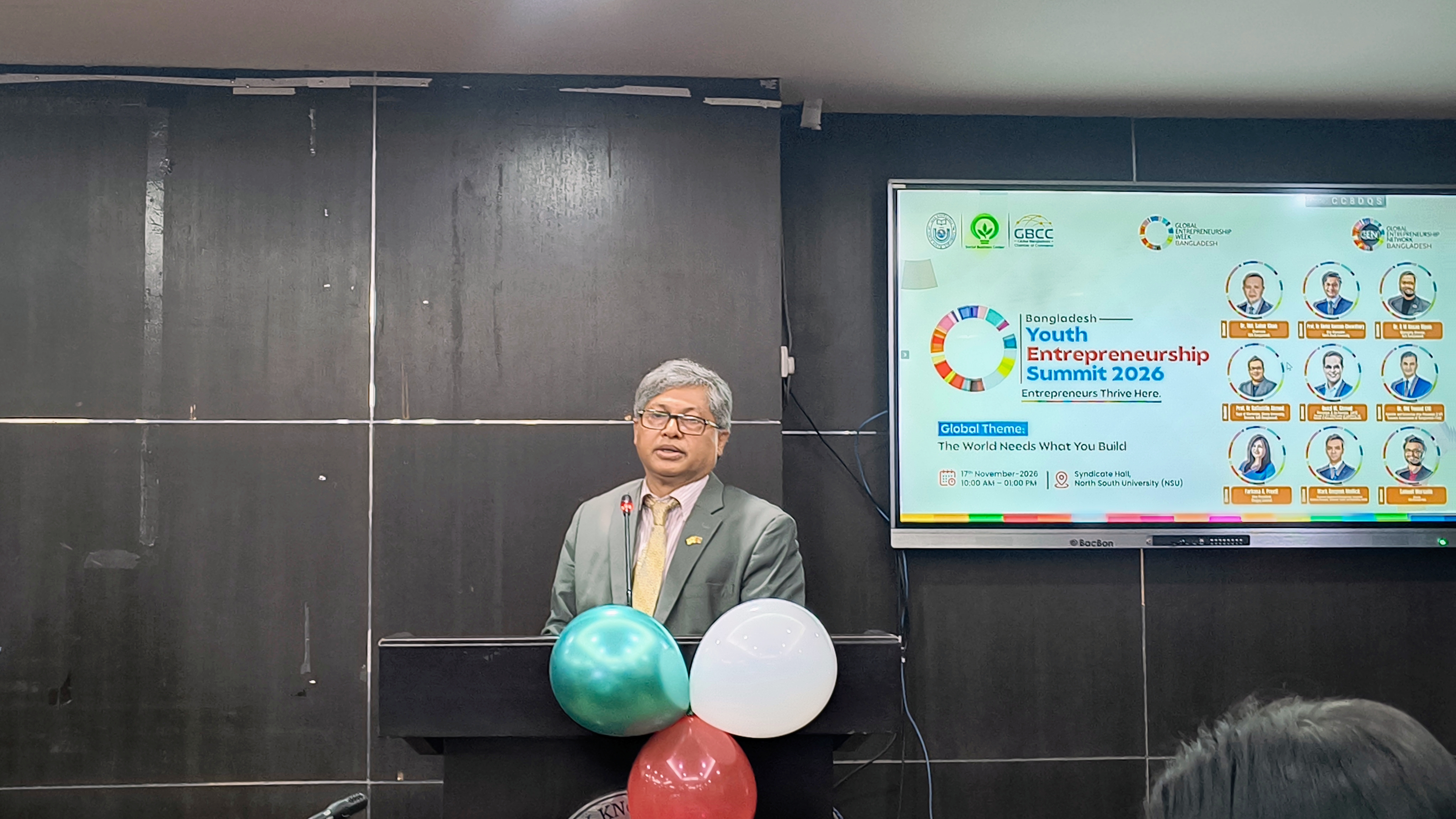
Highlighting NSU's institutional initiatives, he shared developments in its Innovation Hub, Incubation Hub, and Technology Transfer Office. He also discussed the university's efforts to develop innovative healthcare devices, including a portable dialysis-related medical device, and a nanosatellite project involving university faculty members and students with support from international and national stakeholders.
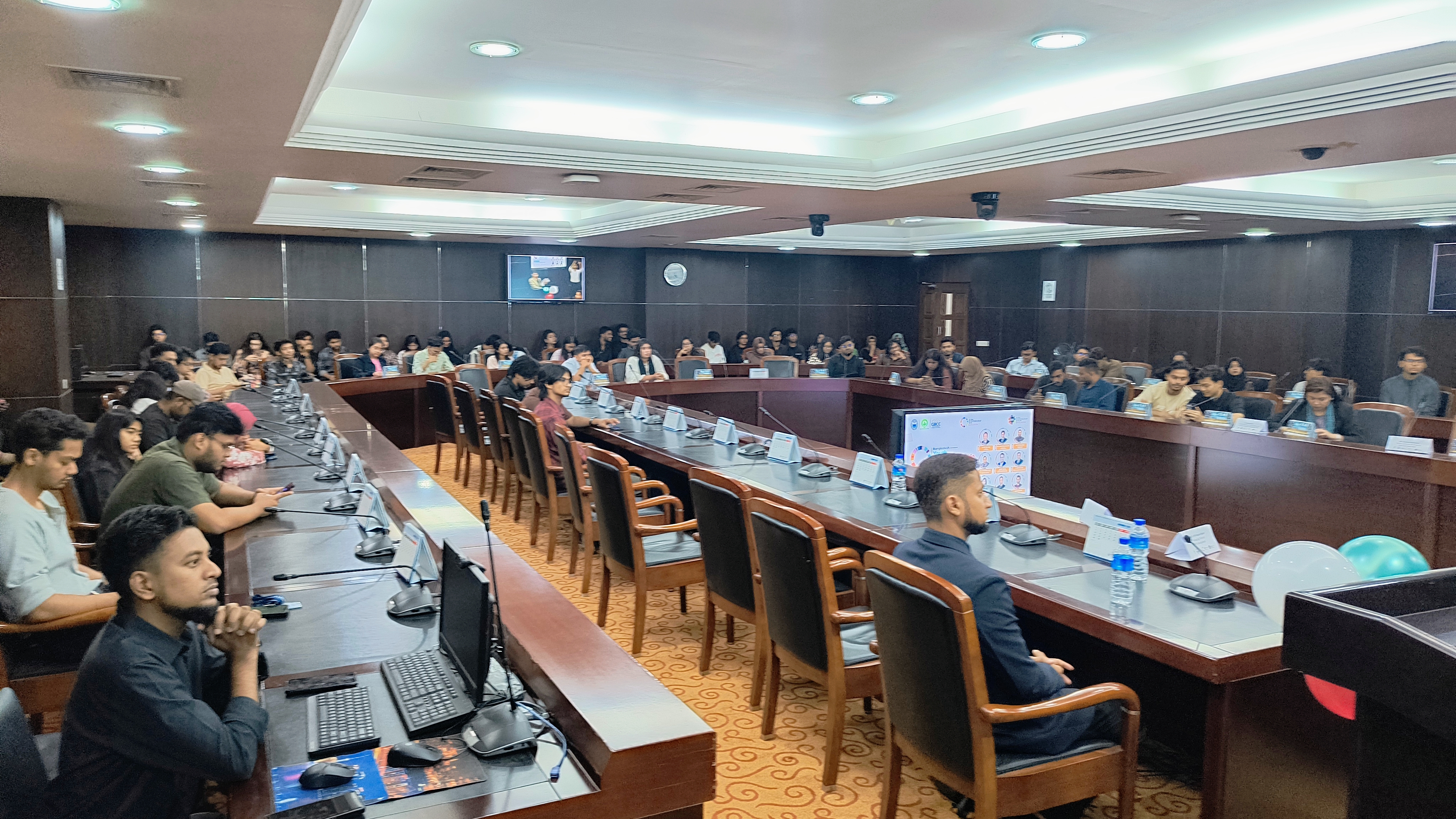
He encouraged students from every academic discipline to identify problems in society and explore how technology, design thinking, and entrepreneurial approaches can create practical solutions.
From Entrepreneurial Mindset to Global Opportunities
Another inspiring contribution came from Kazi M. Ahmed, who shared his personal and professional experiences, encouraging students to approach entrepreneurship with purpose, humility, optimism, energy, innovation and integrity.
Introducing the Phoenix as a metaphor for resilience and renewal, he encouraged young people to rise above difficult circumstances and continuously reinvent themselves.
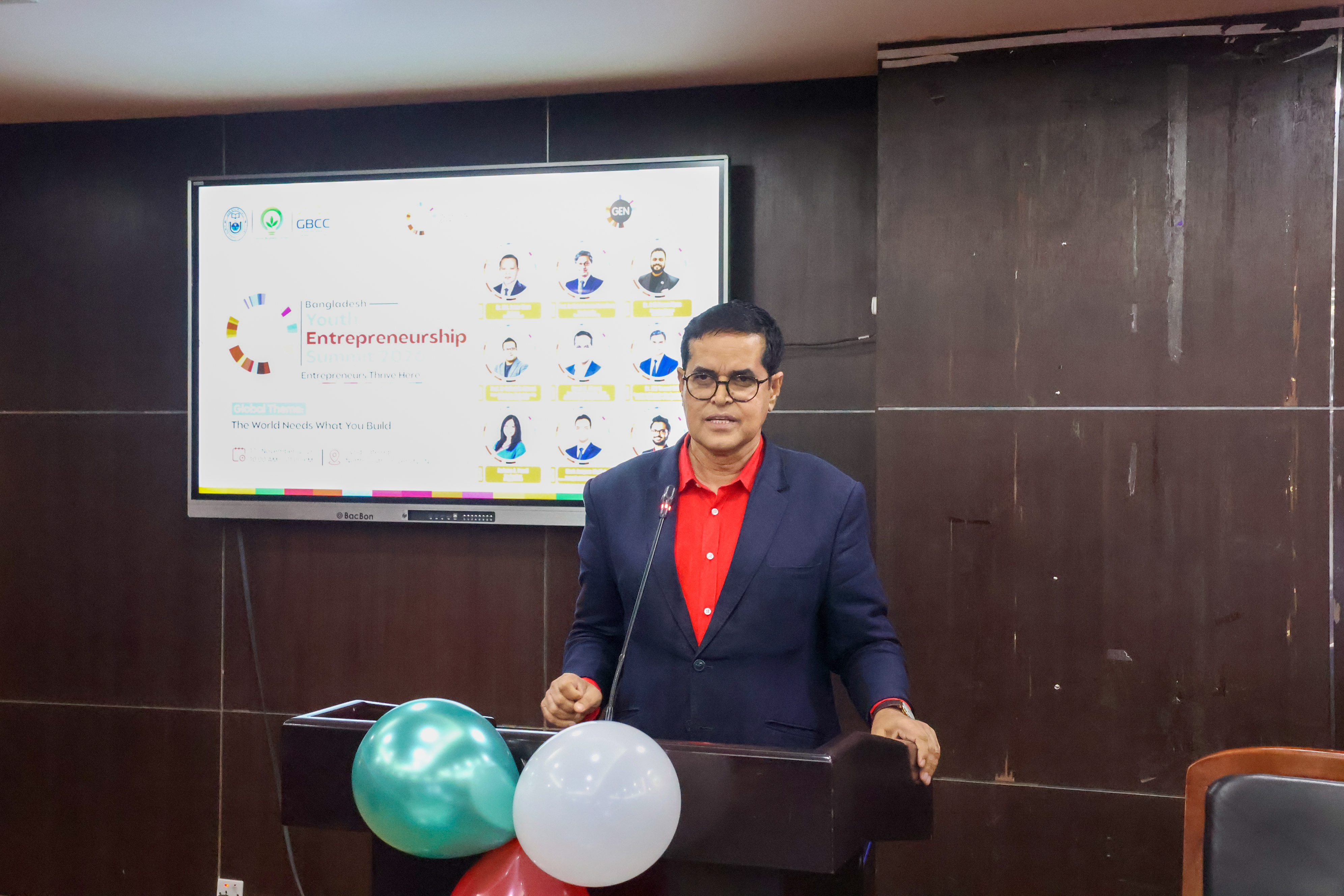
He also discussed the importance of identifying meaningful problems, developing solutions with measurable impact and building connections across local and international entrepreneurial communities. His discussion highlighted the growing possibilities of global collaboration and emerging models of AI-enabled, one-person entrepreneurship.
Through these perspectives, students were encouraged to think beyond conventional business models and explore innovative opportunities that can create value both locally and globally.
Entrepreneurship Begins with Mindset, Skills and Action
In his welcome address, Professor Dr. Rafiuddin Ahmed encouraged students to develop entrepreneurial attitudes and acquire skills beyond conventional academic qualifications.
He highlighted that entrepreneurship is fundamentally a mindset built on confidence, trust, empathy, resilience and compassion. Introducing a practical approach to entrepreneurship, he encouraged students to identify a problem, develop a solution, validate the idea, establish a viable business model and begin their journey.
He also highlighted emerging opportunities in solopreneurship, digital entrepreneurship and the gig economy, particularly through the use of AI-powered tools and business automation.
His central message to young people was not to wait until graduation or a later stage of life to begin pursuing their entrepreneurial ambitions. Instead, he encouraged them to start small, learn continuously and build their ventures step by step.
AI Proficiency and Automation: The Future of Startup Entrepreneurship
Mark Anupom Mollick highlighted how Artificial Intelligence and automation are transforming the way startups operate, creating opportunities for individuals to build and manage businesses with significantly fewer human resources.
He encouraged aspiring entrepreneurs to develop AI proficiency and strategically use tools such as n8n, Notion, Gemini and Perplexity to automate business operations, including research, marketing analytics, recruitment and financial activities.
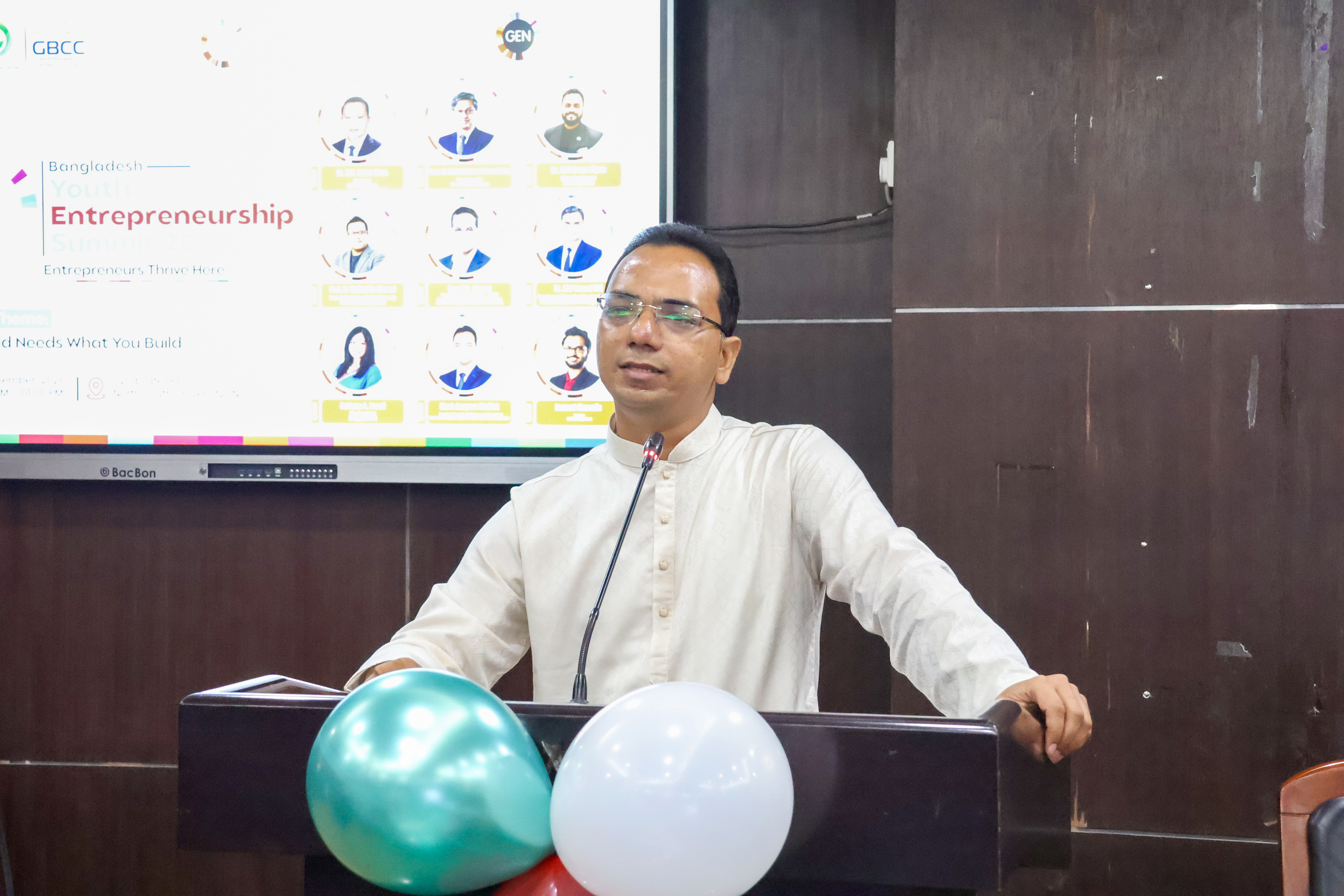
He emphasized that entrepreneurs should build businesses capable of operating efficiently even when they are not personally involved in every activity. By integrating AI-powered tools and automation platforms, a solo entrepreneur can effectively create a team of digital assistants or a "second brain" to support business operations.
He also highlighted the emerging potential of solopreneurship, particularly in technology-driven service sectors, where automation can help individuals deliver services, manage workflows and compete in global markets.
Building a Stronger Startup Ecosystem for Bangladesh
One of the important discussions of the summit focused on the challenges facing Bangladesh's entrepreneurial ecosystem.
Samuel Mursalin, Director of NSU Startups Next, highlighted the structural and institutional barriers that make it difficult for young entrepreneurs to establish and grow businesses in Bangladesh.
Referring to international comparisons of the ease of doing business, he pointed out the gap between Bangladesh and several regional economies. He argued that the challenges facing young entrepreneurs should not simply be attributed to a lack of talent. Rather, the surrounding ecosystem, including regulatory processes, institutional coordination, access to support and startup infrastructure, must also be strengthened.
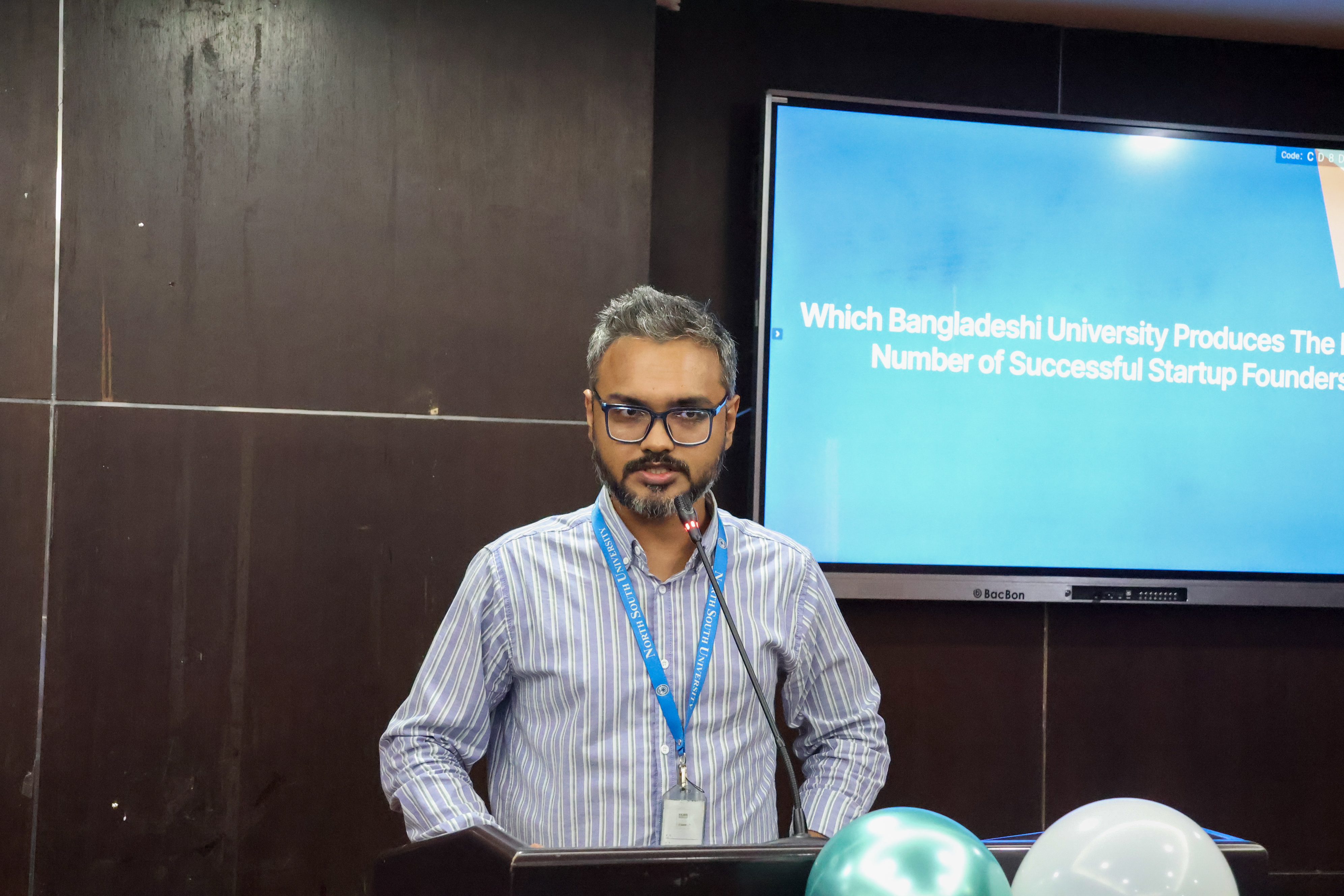
He emphasized the need for universities to establish more startup incubators and accelerators capable of developing a strong pipeline of entrepreneurs. He also called upon ecosystem builders, policymakers, educational institutions and industry stakeholders to work collectively to create an environment where young entrepreneurs can thrive.
His discussion reinforced an important message: nurturing talent requires more than encouraging young people to innovate; it also requires building the support systems that allow their ideas to succeed.
Women in Entrepreneurship: Challenges and the Way Forward
The summit also addressed the importance of women's participation in entrepreneurship through a dedicated session titled "Women in Entrepreneurship: Challenges and Way Out."
The session featured Farhana A. Preeti, Vice President of Shajgoj, who shared practical insights from her professional journey and experience in the beauty and personal care industry.
She particularly emphasized that entrepreneurship requires understanding every aspect of a business, including human resources, procurement, sales, marketing, finance and regulatory compliance.
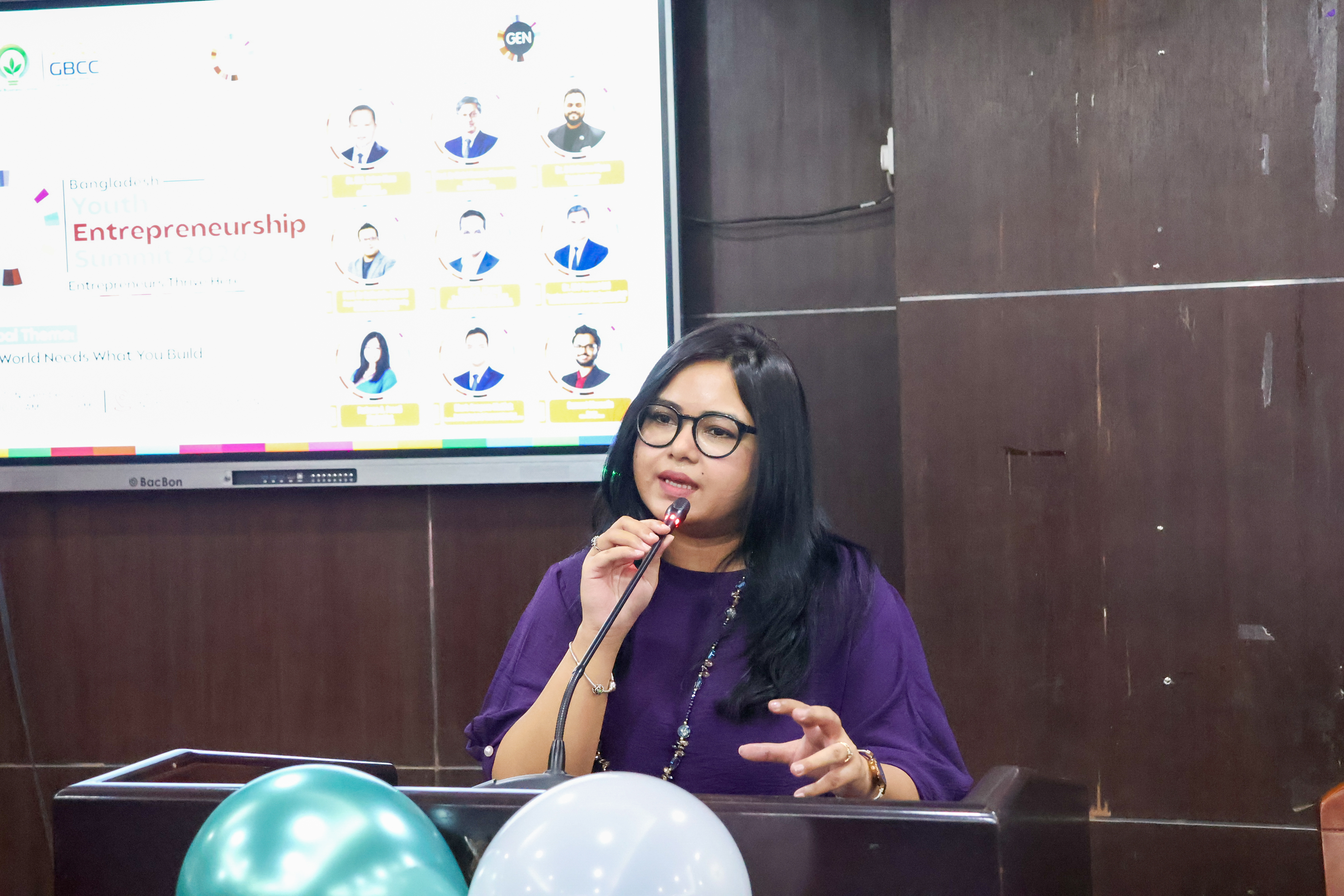
Sharing insights into Shajgoj's business journey, she highlighted the importance of customer trust, service quality, authentic products and customer loyalty. She also discussed the significance of understanding trade licensing, taxation, product certification and regulatory requirements before expanding business operations.
Her message encouraged aspiring women entrepreneurs to develop practical business knowledge, build confidence and become more aware of the institutional and regulatory processes necessary for sustainable business growth.
An Important Step Towards a More Entrepreneurial Bangladesh
The Bangladesh Youth Entrepreneurship Summit 2026 brought together multiple perspectives on what it takes to build a successful entrepreneurial future. From institutional support and startup financing to technological innovation, regulatory awareness, women's participation and global networking, the discussions highlighted that entrepreneurship requires a collective effort.
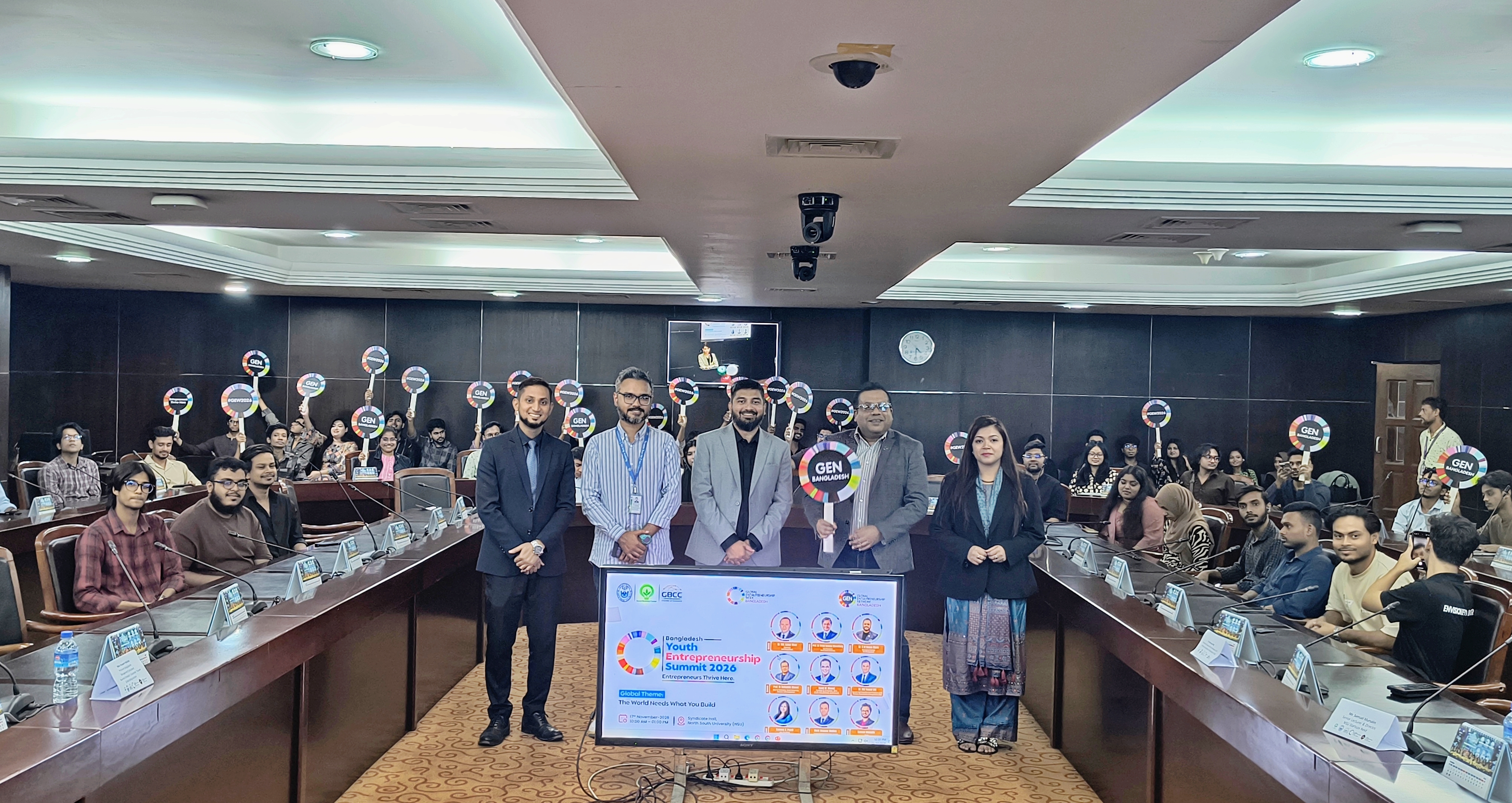
The summit reinforced the idea that universities must go beyond producing graduates for existing jobs. They must also create environments where students can experiment, develop ideas, access mentorship, build startups and become future job creators.
As Bangladesh continues to experience rapid economic and technological transformation, initiatives like this can play an important role in connecting young talent with the knowledge, networks and opportunities required to build sustainable enterprises.
The message of the summit was clear: Young people should not wait for opportunities to come to them. They should develop the skills, confidence and creativity to build those opportunities themselves.
And as the global theme of GEW 2026 reminds us:
"The World Needs What You Build."
About North South University (NSU)
Established in 1992, North South University is one of Bangladesh's leading private universities. Located in Bashundhara, Dhaka, NSU offers education across multiple academic disciplines and emphasizes research, innovation, industry engagement and extracurricular development. Through initiatives such as NSU Startups Next, its Innovation Hub, Incubation Hub and Technology Transfer Office, the university is working to strengthen its entrepreneurial ecosystem and encourage students to transform innovative ideas into impactful ventures.
About Global Entrepreneurship Network Bangladesh
GEN Bangladesh works to strengthen the country's entrepreneurial ecosystem by connecting entrepreneurs with global networks, investors, mentors, institutions and opportunities. Through initiatives such as GEW and the Youth Entrepreneurship Summit, GEN Bangladesh encourages innovation, startup development and greater participation of young people in building the future economy.
About Global Entrepreneurship Week (GEW)
Global Entrepreneurship Week (GEW) is a worldwide initiative celebrated every November across more than 200 countries, bringing together entrepreneurs, innovators, investors, educational institutions and policymakers. Led by the Global Entrepreneurship Network (GEN), GEW promotes entrepreneurial thinking, innovation, startup development and collaboration. In 2026, the celebration takes place from 16–22 November under the global theme “The World Needs What You Build.”
For press inquiries or partnership details:
Global Entrepreneurship Network (GEN) Bangladesh
Phone: +880 1833-102819
Email: genbdprogram@gmail.com