

It’s been more than a year since Russia invaded Ukraine. This war is forcing people to leave their homes and businesses, start over from scratch in neighboring countries and help each other during this terrible time. Solidarity and support become the main weapon in this fight against injustice and fear.
Imaguru Solidarity hub in Vilnius
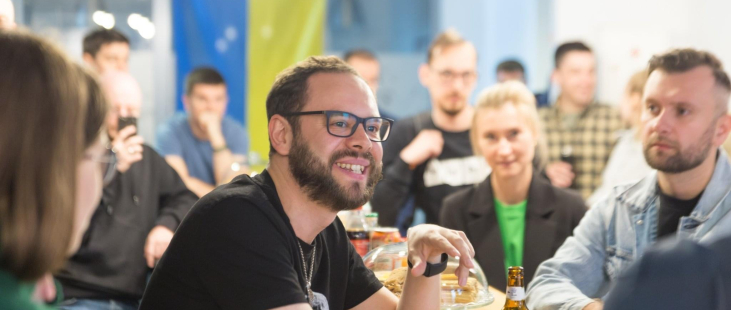
After thousands of people were forced to leave Belarus after the protests in 2020, Imaguru launched the Solidarity hub to facilitate the democratization of the country. When the Russian war in Ukraine started, the hub moved on, quite naturally, to inviting Ukrainian people to join in. First, Imaguru's employees were providing things as simple as shelter volunteer help to people fleeing the war zone. Now, the Solidarity hub provides all services to Ukrainian people free of charge. For instance, any freelancer can find a place to work from at Imaguru's headquarters; it provides mentoring and consults, plus all kinds of support to Ukrainian startups, too.
Civic activism isn’t Imaguru's core activity—and yet democratic activities quite naturally flow from its vision. Solidarity and the will to live in a better world drive its mission further, away from nation-state borders.
What Imaguru sees now is that the mindset of solidarity brings two communities—that of Belarusians in political exile and of people fleeing the Russian war in Ukraine—closer together. What is born is a unique community of enterprising people ready to make the world better, bit by bit.
The reality of growing a startup in a crisis region
Looking at the situation through the prism of possibilities, adversity isn’t always a bad thing for entrepreneurs. It makes people resilient, first of all. Whatever happens, they need to be there, thinking of how to implement the change in a situation that isn’t always ideal or how to create a solution to a new problem.
Many of our Ukrainian resident startups show incredible courage and dedication, proceeding to function in the war area. Other companies (ones that had to flee Belarus, for instance) develop new market fits, adapt to a changeable situation, and become more ‘antifragile’.
To grow a startup in a crisis region, you need to always be ready for change. Not only during challenging times: a startup should be ready to face any unpredictable situation. Relocation and a need to operate in a different country, adapting your business model to a new location and audience—these are just a few examples of things that happen often.
You can’t plan a lot in a crisis region simply because the situation isn’t dependent on your decisions. So agility and flexibility are a must. You also need to make decisions quickly. Normally, strategizing is very important. However, the data at hand is often insufficient, so you have to rely on your intuitive vision. That comes from practice, but you can also learn it from others.
The true outlook for Ukrainian startups right now
The war will stop one day. The realistic outlook is that many companies will be building up and reviving the region after it is over. Ukraine needs strong entrepreneurs to do that. All they should do now is meet new people, find large investors, and learn exciting things. This vision is equally relevant for all the startups in exile, and all businesses that needed to relocate and start working globally.
While some investors are reluctant to invest in Ukrainian businesses because of the perceived high risks, there are still those who are actually willing to invest. In terms of Ukrainian startups finding their global market fit: customers don’t care where the startup founders are coming from. As long as you take care of the community and are solving real people’s problems, you’ll be loved by your clients.