


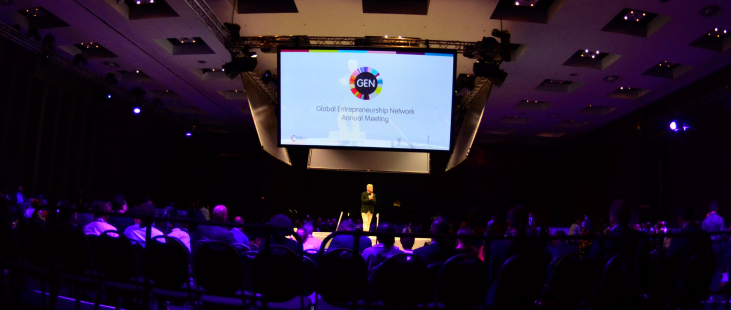


I’ve just returned from the Global Entrepreneurship Congress in Istanbul. The GEC is the world’s biggest gathering of startup and ecosystem professionals, bringing together thousands of delegates from 170 nations.
After a hectic week, I took a few minutes to note down some thoughts on what I consider to be the most significant trends in this developing global movement.
1: We’re getting better at using what we’ve learned: 'big data' is becoming 'big action' for ecosystem builders
In a golden age of entrepreneurship data, the problem for ecosystem builders is not getting access to information but understanding and applying it. Being able to use data to drive actionable insight and meaningfully improve ecosystem performance is a fine art.
The GEN has played a pivotal role developing institutions like The Global Entrepreneurship Research Network and Startup Nations which are delivering ever-increasing amounts of robust data on ecosystem performance. This research informs public and private decision makers all over the world about actions they can take to build vibrant startup ecosystems in their own context.
This data has already taught us a lot. We've learned that net job growth is driven by entrepreneurial firms, we've been able to measure that entrepreneurship has fallen by half over the past generation, we now know that the slowing of entrepreneurship can be linked to declining GDP. We even have data to prove that social inequality can be linked to low rates of entrepreneurship.
But data of this type is only truly valuable if we can use it to drive change. This year the GEN network took significant steps to better apply practical research on startup ecosystems in a way that results in actionable, scalable insights. It is an exciting moment to witness.
Top of the pile was the new Global Ecosystem Report, launched at the GEC in partnership with Startup Genome. Looking at 45 leading ecosystems globally this report dives into leading startup ecosystem sub-sectors, mapping lifecycles and giving national policymakers the tools they need to make targeted interventions.
The report concludes that while there have been significant successes in our work to scale new ecosystems, the wins are so different that they do not offer a direction of travel for replication. A new, scalable global model is lacking and is needed urgently; GEN is working on this model from a truly global perspective,
What makes this network unique is that it brings a best in class research capacity face to face with a global ecosystem laboratory where we can develop and test a range of new models and approaches. Each new hub that connects to the GEN network (170 and counting) means more insight into what we can do to help ecosystems grow and thrive in different contexts.
As proof of this, on the ground at the GEC I noted countless session among global delegations talking about how they are using the pipeline of data that comes from GEN to innovate and grow their own ecosystem. Not least in the UK. We were really lucky to be joined by colleagues Scotland and Wales, both exciting ecosystems following their own growth models alongside what is taking place in England.
What I saw at the GEC this year made me excited about how we can apply global data at a UK wide level.. With data coming from the top and operational learning from the bottom we’re starting to see a path to a time when GEN is capable of accelerating growth withing countless individual ecosystems.
2: Bilateral thinking IS network thinking
Building a real network organisation is hard. Especially when the scope of that network - to build one unified startup ecosystem globally - is so ambitious.
In the beginning, it is important to provide a strong enabling framework from the centre and to empower all network members to connect on an even playing field. GEN has done this incredibly effectively, delivering a range of well-resourced platforms and institutions designed to foster collaboration.
But the next step, one that all maturing networks must go through, is to remove the centre from the equation and allow independent bilateral connections between different parts of the network to flourish.
I know from personal experience that this hardest part of real decentralised network building. Success is by no means guaranteed.
These networks take huge strategic and resource investment. But the payoff is worth it many times over. Now that GEN has such a strong and diverse community of ecosystems all pulling in one direction the capacity for new one-on-one partnerships to develop is huge.
In much the same way as GENUK and other national members seek to connect policy to action to drive startup culture we need to build on GEN’s centralised global activity with a range of dynamic new ecosystem to ecosystem partnerships. These connections will grow organically and use the GEN network as their catalyst, rather than their driving force.
So I was excited to see the launch of GEN Ecosystem Connect at the GEC. Ecosystem Connect is looking beyond Silicon Valley to facilitate collaboration and partnership between startup ecosystems in promising mid-tier cities. Of course, this work is of great interest to us in the UK as we seek to develop national strategies that support every city in the UK to grow and develop a unique ecosystem identity, not just ape and copy what has worked in London.
GEN Ecosystem Connect provides a valuable structure for local ecosystem builders and leaders around the world to share knowledge, networks and markets to help their rising startups thrive — rather than watching them relocate to massive startup hubs. Effective ecosystem support is a valuable way to stop the brain drain.
In the UK we are planning to launch a range of new programmes that will connect parts our national ecosystem to peer groups around the world, with a focus on key export markets for UK startups. As the UK starts to add details and practical steps to our post-Brexit vision, the GEN network is looking more and more like a powerful vehicle to help shape the UK’s startup ecosystem’s engagement with a hugely valuable peer network.
3: Global ecosystems builders are looking for practical ways to connect to the UK.
Last year at the GEC 2017 in Johannesburg, all anyone wanted to talk to me about was Brexit. The referendum vote was relatively recent and fellow GEC delegates reacted with a mix of surprise and bemusement at the UK’s decision to go its own way and leave the EU.
But this year things were different. The systemic shock that Brexit caused in the UK and Europe had subsided and people were keen to talk about the practicalities of retaining close ecosystem ties after we formally leave the EU bloc.
I was really struck by how the GEN community can act as an effective conduit for many parts of the UK’s ecosystem to connect with international peers, either in direct bilateral connections or as part of the larger subgroups within the network.
Take the example of GEN Europe and JEUNE. GENUK is an active member of both institutions and is actively collaborating to develop effective new programmes that guide policy and boost economic growth by fostering connecting between vibrant startup ecosystems. In my view, these platforms can only grow in importance for the UK after we leave the EU.
Another significant community within GEN is the Commonwealth group of nations. While the heads of state from this group gathered in London for the annual Heads of Government meeting representatives of their respective ecosystems were sitting down in Istanbul to plot out new partnerships and develop platforms to collaborate and share innovation. GENUK sees huge opportunity to connect with this community and inject a new thread of value into this powerful fast-growing entrepreneurial economies.
Brexit is a reality and the impact it will have on the UK startup and entrepreneurial community will be seismic. Heading into 2019 and the next GEC the UK needs to get much better and championing our successes and shouting about our achievements in all parts of the UK. GEN can help us do this. There will obviously be great challenges ahead but for an entrepreneurial organisation like ours, Brexit also represents a golden opportunity.
As we roll out GENUK national strategy in the coming months I’m hugely excited to connect with every part of the UK and collaborate on new partnerships. Working together, GEN and the UK ecosystem can both accelerate what is working now and identify new opportunities for the UK in this global community. With engaged and sophisticated ecosystem partners in Scotland, NI and Wales, we are perfectly placed to build on changes that will come with Brexit and open ourselves up to the world with a unified GENUK proposition.
GENUK is a new member organisation within the GEN Network, rolling out ecosystem programmes throughout 2018 and beyond. If you would like to hear more drop me an email