

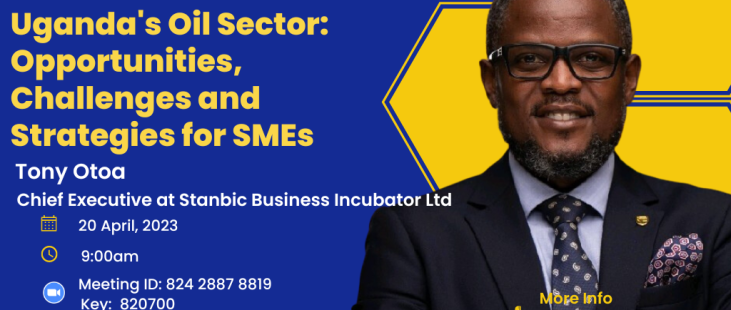


In a recent session hosted by Tony Otoa, Chief Executive of Stanbic Business Incubator Ltd, Uganda's oil sector took center stage as SMEs and entrepreneurs gathered virtually to uncover the sector's potential and devise strategies to overcome its challenges. The session, part of Uganda's Business Recovery Series 2023 in partnership with Enterprise Uganda, aimed to equip business owners with valuable insights to navigate the impact of the COVID-19 pandemic and explore new opportunities for growth and recovery.
Opportunities in Uganda's Oil Sector: Tony Otoa emphasized the vast opportunities that lie within Uganda's oil sector, which remains largely untapped. With significant oil reserves waiting to be harnessed, the sector presents a wealth of prospects for local businesses. SMEs can find ample growth potential in supplying goods and services, ranging from logistics to specialized equipment and technology.
Challenges Facing SMEs in the Oil Sector: However, the oil sector poses several challenges for SMEs to overcome. Accessing financing ranks high among these hurdles, as traditional lenders often hesitate to provide funding due to the lack of collateral and credit history among SMEs. Additionally, the sector demands substantial upfront investments, which can prove daunting for small businesses. To address these challenges, Tony Otoa recommended exploring alternative financing options, such as crowdfunding and angel investors. Furthermore, building partnerships and collaborations with established industry players can help SMEs gain access to essential technical expertise.
Strategies for SMEs in the Oil Sector: To thrive in the oil sector, Tony Otoa outlined key strategies for SMEs to implement. Establishing strong relationships with key players in the sector, such as oil exploration companies, opens doors to vital information and resources. Collaboration and partnerships can help SMEs bolster their technical capabilities and overcome the lack of experience. Developing a comprehensive business plan that outlines goals, strategies, and financial projections becomes crucial for attracting financing and investment.
Furthermore, harnessing technology can significantly enhance SME operations in the oil sector. Embracing technological advancements allows for streamlined processes, reduced costs, and increased productivity, granting SMEs a competitive edge in the sector.
Conclusion: The session led by Tony Otoa provided invaluable insights into the opportunities, challenges, and strategies within Uganda's oil sector for SMEs. As part of the Business Recovery Series, this event equipped entrepreneurs with actionable advice to navigate the post-COVID-19 landscape and capitalize on the sector's potential. By building strong relationships, accessing alternative financing options, and leveraging technology, SMEs can position themselves for success and contribute to Uganda's economic growth and development.
