



Global Entrepreneurship Week is built on events: workshops, pitch competitions, meetups, and conversations that bring entrepreneurs together in communities around the world. But the events are only the visible part. Behind each one is someone who spends the other 51 weeks of the year building the ecosystem that makes it possible: recruiting mentors, finding capital, convincing governments and corporations to take part, and connecting founders to people who can help them grow.
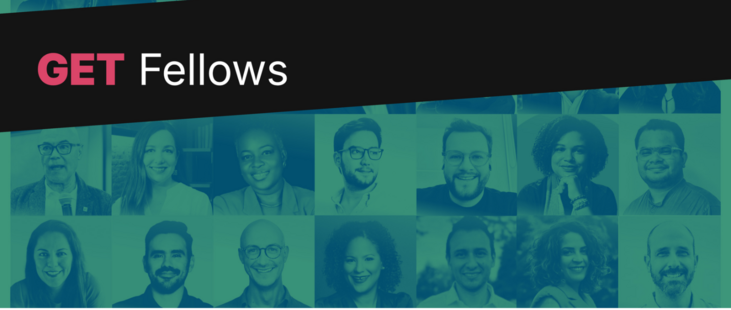
This week, we are celebrating those people. GEN is releasing a series of 28 video interviews with the inaugural cohort of GET Fellows, a group of ecosystem leaders from 19 countries across Latin America and the Caribbean. They lead accelerators and venture funds, universities and government agencies, foundations and trade associations. Their organizations differ, but they share a commitment to helping entrepreneurs in their communities succeed.
Who are the GET Fellows?
GET Fellows, a program of the Global Entrepreneurship Network (GEN) and IDB Lab, is a one-year leadership experience for executive leaders and decision-makers. The 2026 cohort was selected from more than 250 applicants. The fellows met in person at GET Forum in Quito, Ecuador, co-organized by GEN, IDB Lab, the Government of Ecuador and Alianza para el Emprendimiento e Innovación (AEI), GEN’s longtime partner in Ecuador. That’s where these interviews were recorded.
Each fellow was asked the same questions: What are you building, and what gap are you filling? What is your biggest challenge? What is the fellowship teaching you? What will you take back to your community? The answers vary widely, but common themes run through them.
“You are not alone”
The most common message may also be the simplest. Building an ecosystem can be lonely work, whether you are in a large market or a small one. Tamaisha Eytle, who leads The Possibilities Agency in Barbados, describes building a national innovation ecosystem for an island of about 300,000 people, and says the fellowship has given her a community of peers facing similar challenges. Corinne Lebrun, who manages impact funds in Ecuador, says the cohort has shown that Latin American ecosystems are more alike than they usually assume. Marcela Fujiy, founder of Be.Labs in Brazil, offers the same message to entrepreneurs: you are not alone.
Getting capital to where it is needed
Many fellows are working on access to capital. Rodrigo Villalta of Caricaco Ventures explains why venture capital has not reached Central America equally, and Luciano Boggiano of iThink VC describes investing in emerging markets with strong talent but limited funding. Mati Barbero of 401 Accelerator addresses the need for liquidity and exits, and Florencia Pucciano of Uruguay’s CIE talks about helping startups bridge the gap between seed stage and Series A.
Reaching entrepreneurs who are often overlooked
Other fellows are working to bring opportunity to people and places that are often left out. Be.Labs supports women entrepreneurs in Brazil’s North, Northeast, and Central-West regions. Pantera Makers is building the first accelerator program in the Colombian Amazon. In Haiti, Joanne Alexis Bounouni’s GECA Foundation helps lower-income entrepreneurs, especially women and youth, structure their businesses.
Connecting universities, governments, and corporations
Strong ecosystems depend on collaboration across sectors. Marcos Vega of Prendho at Universidad Técnica Particular de Loja in Ecuador and Robert Veiga of UNIMET in Venezuela discuss the role universities play in building entrepreneurs. Government leaders such as Jessica Olivan of El Salvador’s Ministry of Economy and Camila Medeiros of Brazil’s ENAP talk about how public institutions can support innovation. Javier Salinas of Misión Tres in Peru and Sebastian Gonzalez of CIVLAC discuss bringing corporations into the ecosystem through open innovation and corporate venturing.
From Quito back home
The fellowship is only beginning, and fellows are already acting on what they’ve learned. Varinka Farren of HUB APTA in Chile says she has formed a new alliance with a fellow. Others are taking back new connections, funding ideas, and plans for regional partnerships. Several say they plan to share their experience with their own communities.
Watch the interviews
If you are among the thousands of people hosting or attending a GEW event this year, these interviews show the kind of work that sustains an ecosystem all year. We hope they inspire you, and we encourage you to share them with your own network.
>Watch the full GET Fellows playlist
To learn more about the program and meet the full cohort, visit the GET Fellows 2026 page.
Meet the Fellows
Ana Abreu, Boost (Dominican Republic)
Joanne Alexis Bounouni, GECA (Haiti)
Matias Barbero, 401 Accelerator (United States)
Kamesha Blake, Jamaica Manufacturers and Exporters Association (Jamaica)
Luciano Boggiano, iThink VC (Paraguay)
Daniel Buchbinder, Alterna (Guatemala)
Tamaisha Eytle, The Possibilities Agency (Barbados)
Varinka Farren, HUB APTA (Chile)
Pablo Freund, Endeavor Ecuador (Ecuador)
Marcela Fujiy, Be.Labs Aceleradora (Brazil)
Sebastian Gonzalez, CIVLAC (Chile)
Corinne Lebrun, CREAS Ecuador (Ecuador)
Julian Martinez, Suricata Labs (Colombia)
Camila Medeiros, Escola Nacional de Administração Pública (Brazil)
Carlos Andres Mejia, Pantera Makers (Colombia)
Marcos Mueller, Darwin Startups (Brazil)
Jessica Olivan, Ministry of Economy of El Salvador (El Salvador)
Catalina Pallares, Fundación Bolívar Davivienda (Colombia)
Rodrigo Paolilo, Rede+ Group (Brazil)
Florencia Pucciano, Centro de Innovación y Emprendimientos (Uruguay)
Carolina Puerta, New Ventures (Mexico)
Josué Reyes Mejía, Impact Hub Honduras (Honduras)
Javier Salinas, Misión Tres (Peru)
Rene Salomon, Fundación Trabajo Empresa (Bolivia)
Stevie Smyth, SVX MX (Mexico)
Marcos Vega, Prendho / UTPL (Ecuador)
Robert Veiga, Universidad Metropolitana (Venezuela)
Rodrigo Villalta, Caricaco Ventures (Costa Rica)