


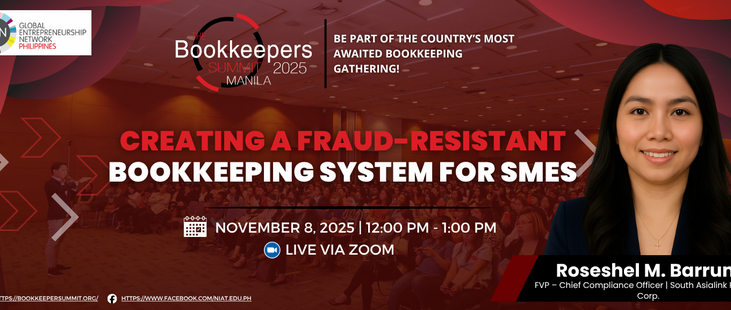


On November 8, 2025, from 12:00 PM to 1:00 PM, participants joined an in-depth discussion on how SMEs can strengthen their bookkeeping systems to prevent fraud. Speaker Roseshel M. Barrun explained that many fraud incidents thrive in environments with weak controls, inconsistent documentation, and a lack of monitoring—challenges that SMEs often face due to limited manpower or resources.
Throughout the session, Roseshel outlined the essential elements of a fraud-resistant bookkeeping system, including segregation of duties, proper authorization procedures, and regular reconciliation. She emphasized how simple interventions—such as audit trails, approval workflows, and task rotation—significantly reduce opportunities for fraudulent activities. Participants also learned how to identify early warning signs, such as unusual entries, altered documents, and repeated “adjustments” in financial records.
The session also highlighted the role of technology in protecting SME finances. Roseshel discussed how digital tools can automate record-keeping, flag inconsistencies, and improve transparency across financial transactions. Examples were shared showing how SMEs successfully reduced risks by transitioning to paperless systems, using cloud-based bookkeeping platforms, and implementing secure access controls.
By the end of the session, attendees gained a strong understanding of how to create an environment where fraud is difficult to commit and easy to detect. Roseshel encouraged SMEs to proactively strengthen their processes, continually monitor financial activities, and foster a culture of accountability—ensuring long-term protection and financial integrity for their organizations.