





Why This Study Matters
Across Africa, many startups raise funding but still collapse. This raises an important question:
Was the problem strong enough to build a real business?
This study focuses on diagnosis, not criticism—understanding where startups went wrong and what founders can learn from them.
How the YAGBA Framework Was Tested
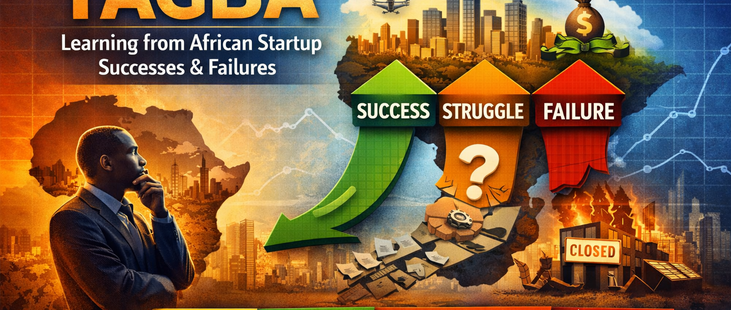
To validate the framework, startups were grouped into three categories:
- Successful startups with strong problem definition
- Failed startups with weak problem definition
- Startups that had strong problems but still struggled
This approach helps identify what truly drives success in African markets.
What Success Looks Like
Strong Problem = Strong Startup
Some African startups succeeded because they solved urgent, frequent, and high-value problems.
Examples include:
- M-Pesa – Solved the urgent need to send money quickly
- Zipline – Delivered life-saving medical supplies on time
These companies succeeded because:
- The problem was urgent
- People used the solution frequently
- Customers were willing to pay
- There were few strong alternatives
Key Insight:
When urgency, frequency, and willingness to pay are high, adoption happens naturally.
Why Many Startups Fail
Real Problems… But Weak Business Models
Some startups addressed real issues but still failed due to weak business structures:
- Jumia – High logistics costs and weak margins
- Kobo360 – Thin margins and operational complexity
- Sendy – Low switching costs for users
Key Insight:
A big problem does not automatically create a good business.
Social Impact ≠ Commercial Viability
Some startups created value but couldn’t generate sustainable revenue:
- WeFarm – Farmers benefited but couldn’t pay
- 54gene – Strong science, weak paying market
Key Insight:
A problem can be important, but still not profitable.
Strong Problems… But Wrong Execution
Some startups had strong problem foundations but failed due to execution or model issues:
- Andela – Had to pivot business model
- Dash – Governance and execution challenges
Key Insight:
Even with a strong problem, poor execution can lead to failure.
Common Patterns Across Failed Startups
Across multiple African cases, the same issues appear repeatedly:
- Weak willingness to pay
- Thin profit margins
- Low switching costs
- Dependence on informal alternatives
- Solving “big” problems that are not commercially viable
The Big Lesson for Founders
The evidence is clear:
Most startup failure begins with weak problem definition.
Successful startups consistently have:
- High urgency problems
- Frequent usage
- Clear willingness to pay
- Strong competitive advantage
When these are missing, even funding cannot save the business.
What This Means for Sierra Leone & African Ecosystems
Many startup programs today focus on:
- Hackathons
- Grants
- Innovation challenges
- Incubators
But they often ignore the most important question:
Is the problem strong enough to support a sustainable company?
This is the gap that the YAGBA framework is designed to fill.
| Attachment | Size |
|---|---|
| Yagba__vAfrican_cases_100326_Graveyard.pdf | 968.32 KB |
| Yagba__vFirst_principle_8_African_cases_100326_v2.pdf | 1.01 MB |