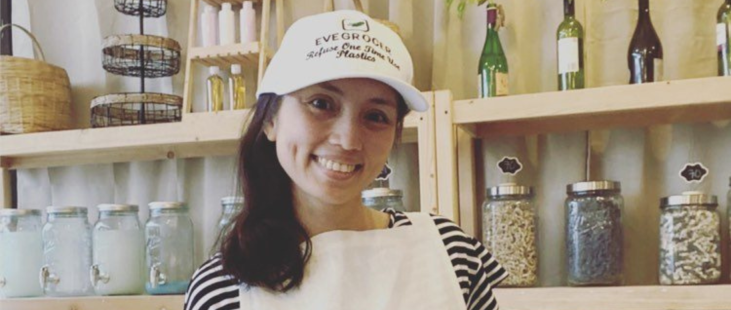
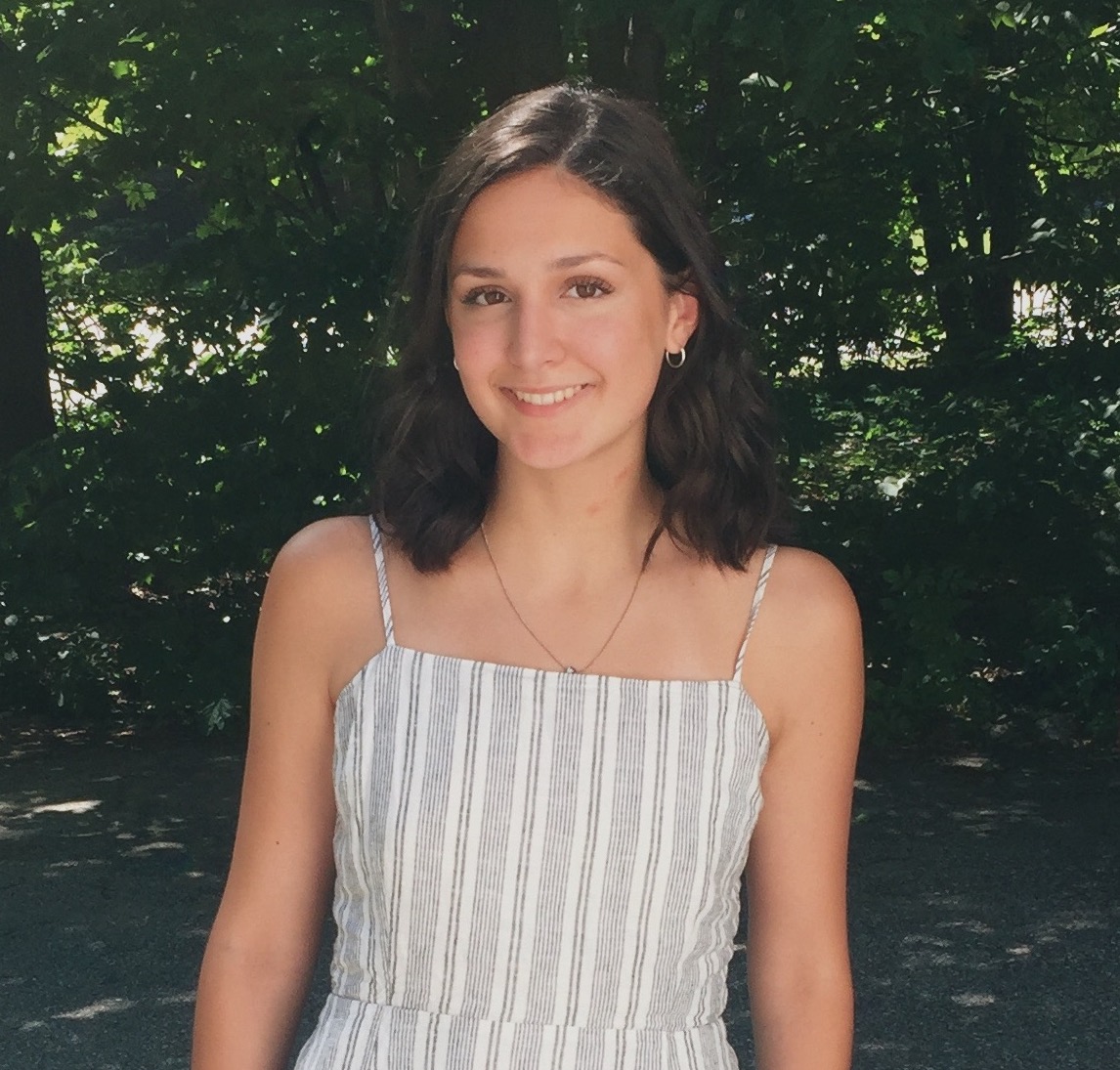


When Ma.Leonelle de Leon-Sandoval was a kid, milk came in glass containers. The reusable bottles were delivered to customers’ doors and, once they were empty, de Leon-Sandoval remembers saving them instead of throwing them away – the bottles would be picked up, sanitized, filled with milk and sent out to customers, again and again.
The milk delivery business model is what inspired de Leon-Sandoval to start EveGrocer, a sustainable online marketplace with zero-waste packaging. The company, which she launched in 2020, delivers food and household products to customers across the Philippines in containers that are returned and reused, tapping into de Leon-Sandoval’s roots while eliminating the need for single-use packaging.
In 2020, de Leon-Sandoval and her business placed among the top 100 in the Entrepreneurship World Cup (EWC) out of 100,000 total applicants. Since then, de Leon-Sandoval’s vision for a greener world has paid off – EveGrocer continues to thrive and, with the upcoming improvements to its online interface and the launch of its first product line, its success is not expected to slow down any time soon.
GEN caught up with de Leon-Sandoval to see how she and EveGrocer continue to make a difference.
*This interview has been edited for length and readability.
GEN: Why is environmental sustainability so important to you?
Ma.Leonelle de Leon-Sandoval: I love spending time with my kids; everything I do is to make them happy. I cannot imagine a future where they aren’t able to do the same for their own children. It’s sad if, for example, they don’t get to enjoy the colorful coral reefs and beaches with their kids because of climate change. It’s really alarming to think of the future in that way.
GEN: What is it like growing a business in the Philippines?
Ma.Leonelle de Leon-Sandoval: Here in the Philippines, we need to be resilient. Our products must be unique and we have to master our craft. Our customers are very price sensitive, so if competitors offer cheaper options, they’ll likely choose them. Because of this, your products have to be the best – you should create an artisan product and make it as perfect as possible.
GEN: How has customers’ price sensitivity impacted you and your business?
Ma.Leonelle de Leon-Sandoval: We all know that sustainable products are costly, especially artisan products, so our business sources affordable necessities instead. We package basic products that customers will buy every day.
The key difference is that we pack them sustainably. EveGrocer operates on a circular supply chain where we pack everything – the meat, the detergent – in reusable containers, and reward returning customers with discounts to encourage them to recycle. It’s really the packing and delivering process that makes the difference.
GEN: What challenges has EveGrocer faced?
Ma.Leonelle de Leon-Sandoval: It’s difficult to convince stakeholders that we are indeed sustainable and not greenwashing. We don’t have the data yet to accurately prove that our customers are recycling – some first-time customers will use discount codes intended for returning customers to get their orders for cheaper, which skews our data on our customer types and their recycling habits. But soon, our site will offer complete transparency in the form of individual recycling, sustainability and carbon footprint scores. It will be much different.
One analyst asked me once, “why are you sustainable? Aren’t you doubling your carbon footprint by using the circular supply chain process?” But our carbon footprint lowers when customers give us the opportunity to make recurring deliveries. When they purchase from us again, we reuse the packaging and reduce the amount of waste we produce. That’s how we’re sustainable.
GEN: You were successful in the 2020 Entrepreneurship World Cup. What impact did that have on you and your business?
Ma.Leonelle de Leon-Sandoval: The Entrepreneurship World Cup was our biggest milestone all year. There were very few opportunities for us in 2020 and the startup scene was challenging, but through EWC, I was able to expand my business. I learned a lot and met many new people.
Here in the Philippines, sustainability isn’t very popular – a lot of people say it’s a first-world solution. Many places outside the country recognize the importance of sustainability, but people here are sensitive to costs.
Placing in the top 100 in the EWC validated us. It allowed us to be recognized on an international platform, and since then, we’ve been included in many programs through QBO Innovation Hub, Launchgarage, Impact Hub Manila and a lot more because of the EWC. It also gave us the opportunity to represent the Philippines for the first time, which we were so honored to do.
It’s been a game-changer for both my business and my life.
GEN: How has your business evolved since EWC?
Ma.Leonelle de Leon-Sandoval: 2020 was a really good year – between 2020 and 2021, our growth rate was 610%. Since EWC, we’ve partnered with the Philippines Department of Agriculture to connect with farmers and incorporated 138 merchants and sustainable brands into our platform.
There have certainly been changes since the pandemic hit in 2020. A lot of mentors warned us that since we’re a pandemic startup, there will probably be a decline in demand for online deliveries because people will be eager to go out after months of lockdown.
But EveGrocer is a post-pandemic concept: even though we’re based online, we’re working on opening brick-and-mortar storefronts. A grocery store needs a hub to operate from, and we need to be able to fulfill deliveries in one space.
Our storefront isn’t completely ready for customers yet, though – we’ve been operating online so the store’s ambiance is low, and our fresh, preservative-free products don’t keep for long, leaving our shelves mostly empty.
GEN: What’s next for yourself and EveGrocer?
Ma.Leonelle de Leon-Sandoval: We’ve been focusing on developing our own line of products to push towards the in-person storefront format – we’ve created different types of chips, trail mix with berries and nuts, and a lot more. We’ve already sent the samples and prices to our distributors and begun advertising.
While we do that, we are polishing our franchise model so we can scale up and expand our operations. And, as an additional revenue stream, we’ve been inviting producers, farmers and even our merchant partners to collaborate with us to use our sustainable packaging.
GEN: What’s the most memorable moment of your entrepreneurial career so far?
Ma.Leonelle de Leon-Sandoval: First, the EWC was very memorable. It was a great experience, and a great opportunity to meet many people from different parts of the world – there were so many amazing entrepreneurs and startups.
After that, I also worked on different acceleration programs. In June 2022, we launched our Eco Livelihood project, Bangon Siargao – which roughly translates to “Rise Up Siargao” – to help support Siargao Island after it was badly hit by a typhoon in the spring. The project aims to help victims get back on their feet through EveGrocer partners’ financial assistance and to implement circular-economy sustainable products in Siargao.