


Until recently, entrepreneurship ecosystem builders lacked a forum to collaborate and grow their communities. Instead, they relied on individual networking or broader economic development networks. This created development issues for ecosystem builders seeking to build strong innovation communities in their respective cities. Now, the ESHIP Summit is providing a space for ecosystem builders to come together, share knowledge, support each other and trail blaze new paths for entrepreneurs.
lead
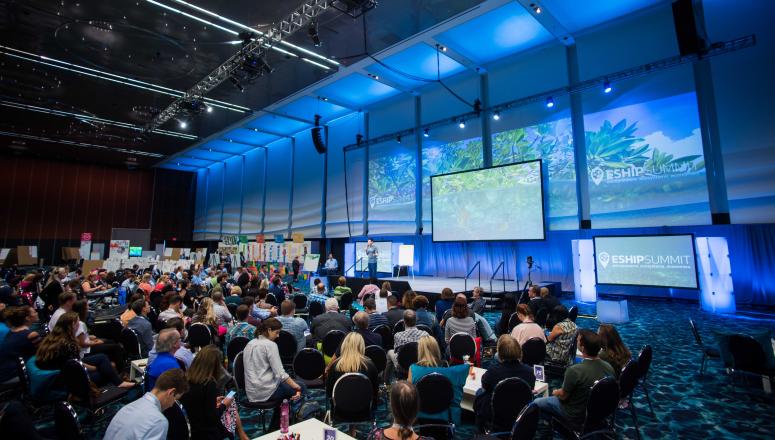
Essentially the ESHIP Summit, a gathering of ecosystem builders hosted by the Ewing Marion Kauffman Foundation in Kansas City, is helping us make this jump.

Image taken from Kauffman Foundation Ecosystem Builders Playbook 2.0
What makes ESHIP stand out is not only the goals it aims to accomplish, but who is working to make those goals a reality. The attendees of the conference were all early adopters, paving the way for their cities to become innovation hubs. They were, and still are, passionate, ready to get their hands dirty and ask complex questions in order to establish a new norm.
This is how ESHIP is strengthening the rise of the United States entrepreneurial ecosystem and empowering cities outside of Silicon Valley and New York to create strong, inclusive and unique innovation communities:
ESHIP is keeping us focused, so we are all working together toward the same goals.
In 2017, ESHIP was about discovery. It was the first time a group of 600 representatives from all 50 states and 10 countries came together to understand the current state of the ecosystem-building field. Throughout the year, the Kauffman Foundation has interviewed hundreds of people, visited 100+ communities and distilled all of their conversations into seven goals that will help keep us all focused.
- Ensure ecosystem builders from diverse perspectives lead our field
- Strengthen the culture within our field
- Established shared outcomes and common lexicon for our work
- Build field-wide communication channels to connect ecosystem builders across networks
- Define the methods and metrics for evidence based ecosystem building
- Expand external stakeholder engagement in ecosystem building
- Develop professional recognition and resources for ecosystem builders
What will it take to achieve these goals? Some talking, a lot of listening and comprehensive conversations about sustainable solutions that can ultimately be adopted across the field.
ESHIP is a meeting of the minds.
As nascent as ecosystem building may be, it’s already clear that our field values inclusivity, thoughtful conversations and collaboration. Instead, ESHIP was a series of design thinking exercises, lea by our peers for our peers.Through the workshops, discussions and topics we all had a chance to share our perspective, listen to the direct experience of other ecosystem builders and begin to have a conversation about sustainable solutions.
ESHIP is helping us find each other.
National organizations like our friends at Techstars, Bunker Labs, StartOut and Startup Champions Network are able to reach broad audiences and engage them in their work. For us, it was a great opportunity to engage new communities in Global Entrepreneurship Week and find cities interested in international partnerships who could utilize our Ecosystem Connect program.
At ESHIP, individuals were able to find partners in crime, hustlers working in cities across the country to achieve similar goals. Believe it or not, some of us even met folks from our own cities who we didn’t know prior to the summit.
Our team at Global Entrepreneurship Network left inspired and ready to share our ESHIP leadenings with our broader network of 170 countries. We couldn’t stop brainstorming ways to take what we learned from the U.S. and use that knowledge in global conversation that we foster throughout the year in our 1:1 or small group conversations, during our Global Entrepreneurship Congress and at our Startup Nations Summit.