




This article is the first of a three-part GEW Series on “Ecosystem Building in Latin America” produced by the Global Entrepreneurship Network, in collaboration with the Latin American Group of Intelligent Ecosystems (GEIAL). Each story spotlights the people, the organizations, and the ecosystems that support entrepreneurial dynamics—amplifying the lessons and leadership shaping the future of entrepreneurship worldwide. Read the next article in this series, here.
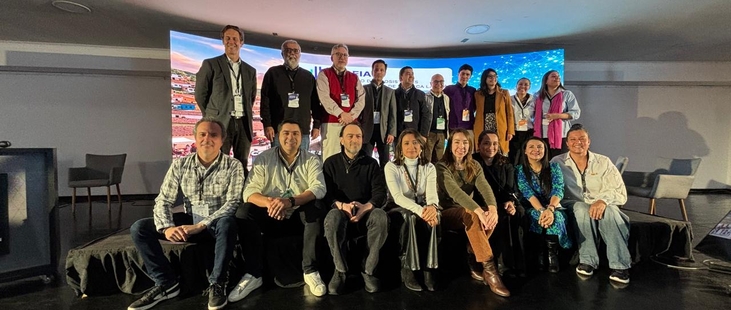
In 2025, the Inter-American Development Bank (IDB) and the Latin American Group of Intelligent Ecosystems (GEIAL) launched a celebration of impact—a recognition of organizations whose work is transforming entrepreneurship in Latin American cities— through the IDB-GEIAL Award for Commitment to Entrepreneurship and Innovation.
“In the GEIAL community, we celebrate the organizations that foster entrepreneurial talent with approachability, vision, and commitment”, said Hugo Kantis, GEIAL's co-founder and Director at Prodem. Blanca Torrico, IDB Specialist in Competitiveness, Technology and Innovation, in turn expressed that they joined GEIAL in launching the awards because it aligns with IDB strategies on three fronts: “in making efforts more visible by recognizing successful initiatives, in supporting learning via collective intelligence, and in enabling cross-sector collaboration.”
Finalists and winners for the IDB-GEIAL Awards are peer-selected. All finalists pitch to their peers before the voting, and regardless of the outcome, they receive scholarships to participate in the IDB-Prodem Ecosystem Developer Certificate program. Winners also gain the opportunity to take part in a learning visit to another GEIAL ecosystem.
In the spirit of Global Entrepreneurship Week (GEW), to inspire peers from across the globe, we are shining a global spotlight on ecosystem support organizations (ESOs) in major Latin American cities. In this first instalment of the GEW Series on Latin America, we explore ESOs in the IDB-GEIAL Entrepreneur Support category, from large and intermediate cities (those metropolitan areas with fewer than one million people).
Entrepreneur Support Organization Finalists From Intermediary Cities
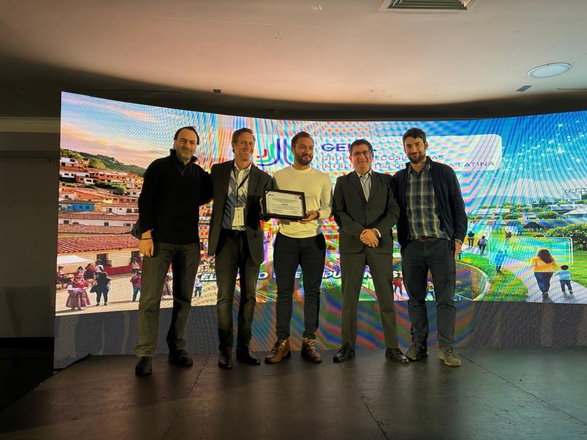
Incuba UdeC is the winner of the inaugural IDB-GEIAL Entrepreneur Support Award. Located in central Chile, at the University of Concepción—a private university established in 1919, the third university established in the country, and the first one outside the capital city. The awardee, the university's incubator and entrepreneurship support platform, has been driving scientific and technological innovation for over two decades, impacting over 7,000 startups that have collectively raised over USD 17 million and generated an average of 272 jobs per year. In fact, GEN Policy member, CORFO—the public agency that promotes innovative entrepreneurship—ranks the entity among the country’s leading incubators. Incuba UdeC continuously delivers innovative support mechanisms for researchers, students, and professionals to validate and scale technology-based ventures, such as investor connections, internationalization support, high-level mentorship, and open innovation programs with corporations.
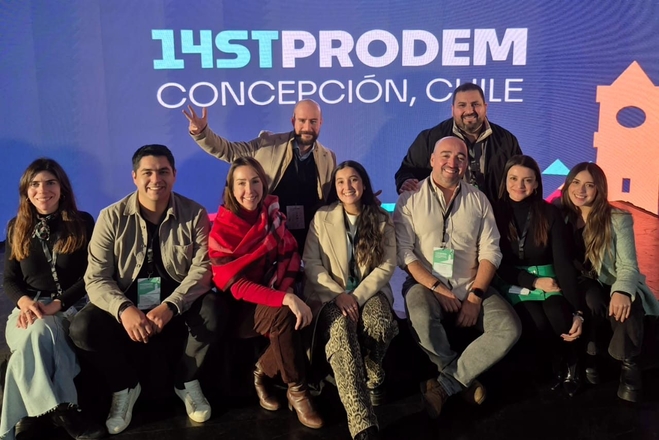
Prof. Jorge Carpinelli Pavisich, Director of Development and Innovation at the University of Concepción, highlighted the importance of the award for the incubator's projection within global networks of learning and cooperation: “The fact that this distinction comes from a high-level Latin American forum and is the result of voting by its stakeholders validates the systematic, collaborative, and impactful work of the University of Concepción—through its incubator—in developing an innovation and entrepreneurship ecosystem with a national and international reach.”
Another Chilean incubator was the third finalist for this year’s Award: La Brújula Incuba, from the Coquimbo region in the country's north. Over the past decade, it has supported more than 600 projects and benefited 15,000 people, with a focus on innovation, gender equity, and sustainable impact. For example, its flagship programs, Mujer Dinámica and +Gabrielas, have empowered over 2,000 women entrepreneurs, turning ideas into high-impact businesses that strengthen the local economy.
Not surprisingly, Manizales Más from central Colombia was also a short-runner. Since 2013, this public-private-academic alliance has supported over 260 companies, which have generated 3,500 jobs with an average growth rate of 40%. Its key initiatives include Fondo Nevado, which connects investors with startups; Crecer Más, which transfers knowledge to other cities; and Open Más de Innovación Abierta, which links startups with large corporations and strengthens the regional ecosystem. Earlier this year, Manizales Más Director Marcela Escobar shared about the organization’s model of city-wide entrepreneurial collaboration in a roundtable on "Towns & Cities Making Entrepreneurial Strides" at the Global Entrepreneurship Congress (GEC) 2025.
Entrepreneur Support Organization Finalists from Large Cities
The 2025 intermediate-city winner in the Entrepreneur Support category was the Cali Chamber of Commerce, serving over 115,000 business owners in Colombia’s third-largest city. In 2024 alone, it supported over 19,000 companies through services to support their fundraising ambitions, such as capital-readiness training and the Capital Summit, which has mobilized USD 68 million in investment commitments. The Chamber also promotes internationalization through the Apuestas Productivas program, which has assisted more than 2,000 companies in expanding into global markets. In addition to boosting business growth and productivity, the Chamber is also committed to promoting environmental sustainability. For example, its Triple Impact platform has supported more than 1,200 companies in advancing sustainable transformation.
Similarly, Ruta N—the Innovation Agency of Colombia’s second-largest city—has supported over 10,000 ventures and connected 450 startups with investment, offering more than 15 programs in incubation, acceleration, smart capital, and open innovation. In coordination with 25 allied funds, Ruta N facilitates startups’ national and international expansion. The city has long been developing global ties to support its entrepreneurs. For example, in 2016, it co-hosted the Global Entrepreneurship Congress in the city.
The Lima, Peru, finalist also highlighted its internationalization efforts in their pitch before the final vote. Emprende UP, the entrepreneurship center of Universidad del Pacífico (UP) in the country's capital city, promotes the entrepreneurial mindset and internationalization through training, mentorship, softlanding services, and support in accessing non-reimbursable funds from the Peruvian national government agency ProInnovate. It also leads initiatives that promote purpose-driven, climate-conscious, and inclusive startups, including the Academy for Women Entrepreneurs (AWE), Climatech, InnovaFEM, and Ecosistema Plateado.
GEN congratulates the teams behind these six organizations working on the front lines with entrepreneurs. Next in this series, we will highlight the IDB-GEIAL finalists and winners in the Ecosystem Development category. To learn more about Global Entrepreneurship Week and get involved, visit www.gew.co.