

The project aimed to improve cultural institutions and creative hubs through informing, education and good practice exchange nationally and internationally.
The study visits were the last stage of this project, preceded by the educational program, which consisted of online training, sector interest, and matchmaking sessions; the hub competition, which selected the delegates who continued to the exchange program in Moldova and Armenia to learn from good practices.
"Each stage of the project was thought in such a way as to ensure the participants' understanding of the hubs, museums or cultural centers ecosystem, the feeling of belonging to a community of creative and cultural leaders, matchmaking activities and experience sharing, job shadowing, community-based learning, and all this to offer transformative experiences", mentioned Olesea Fortuna, project manager.
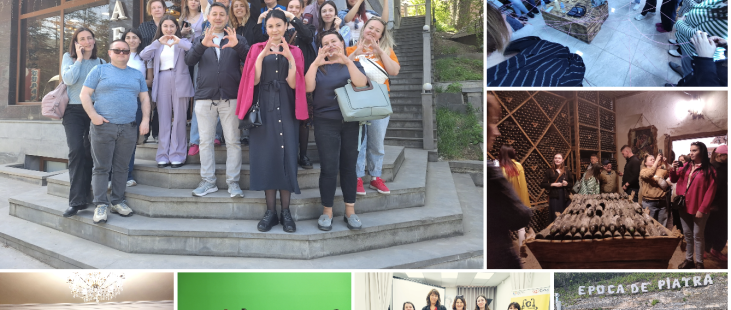
The study visits to Armenia and Moldova offered perspectives on the activity of museums in both countries and the opportunities provided by the creative and cultural industries for young people in the ICC sectors. These cultural attractions combine the past with the present and the future, and they test culinary delights that tell the history of the communities visited.
This activities allowed participants to learn from successful practices and improve their skills. Overall, the project received positive feedback for its achievements in enhancing the cultural sector in Moldova, Armenia, and Ukraine through collaboration, skill development, and international exchange, thus enriching the cultural landscape and promoting diversity in the region.
"It was a great exchange program. The main result or insight for me was understanding how it is essential to collaborate with the government, local institutions and international institutions. The flow of students from the university to labs and cultural centers was insightful to me", stated Mariam Aleksanyan.
"Sometimes it feels too much information, and I need more time. I would like to have the contacts of the cultural organizations we visited and do more research to find ways of collaboration. It would be great if we had more time in several organisations to ask questions about curriculum, the funding, the relationship with other organisations and government", mentioned Syuzanna Petrosyan.
"I managed to decipher the notion of "internationalization of culture", having the opportunity to take over new experiences from colleagues in Armenia. A special place was left by the Cafes that support the youth teams by developing small businesses. TUMO centres that focus not only on the IT, but also on developing the creative-musical industry, which allows youth to develop their talents and acquire new skills in the given field", says Agnesa Grecova.
"The cultural exchange program showed me different points of view and new perspectives. Overall I learned new professional skills and found new information for my personal development and education. Besides, I was able to create connections and relationships that will be useful in the future. I would like to mention the Youth Center in Sevan, an NGO that impressed me, the activities they carry out are similar to ours, they are very good, which made me happy that they are active and innovative", said Nadejda Voloceai.
The CHIEx project is carried out by GEN Moldova in partnership with Supcultura Armenia and Startup Ukraine. CHIEx is funded by the European Union under the EU4Culture project, which is implemented by the Goethe-Institut, the Czech Centers, the Danish Cultural Institute, and the French Institute of Georgia.