


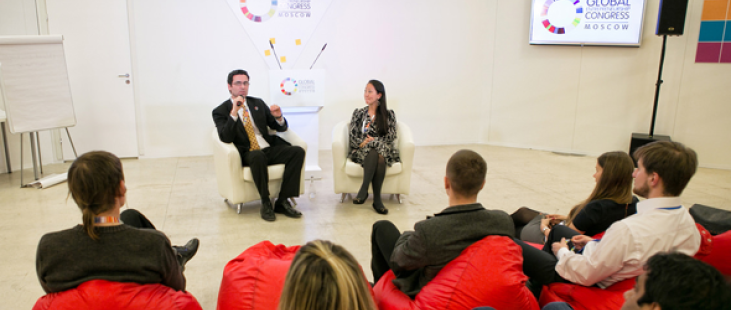


Entrepreneurs from Zambia, Canada, Tunisia, Iran, Ecuador, Croatia, Italy, Pakistan and roughly 15 other countries were invited to participate in the Entrepreneurs Who are Heroes session at this year’sGlobal Entrepreneurship Congress. Participants were nominated for the two-day session based on their contributions to local entrepreneurial ecosystems as well as their personal business successes. The event offered entrepreneurs the opportunity to connect in a small group setting with industry leaders and GEC keynote speakers.
As one participant put it, the small setting gave them “the opportunity to connect with [the keynote speakers] on a personal level” as well as receive practical advice and draw inspiration from their stories. The entrepreneurs chosen to attend the Heroes session were selected for their propensity to create positive change and their desire to better their local communities through their ventures. This session was their chance to take their work to the next level thanks to mentorship and the right tools.
The Heroes session was organized and hosted by GEW Board Member Rebeca Hwang, a managing partner at Rivet Ventures and co-founder of San Francisco-based YouNoodle.
“This is the first time I have actually made an effort to come to another country for a conference,” said Ahmed Khalid, founder of XGear in Pakistan, one of last year’s Startup Open Top 5. “This session really made the trip worth it.”
Just as the participants were thoughtfully selected, speakers were chosen for their skillset, experience and knowledge base to equip the participants to return to their home countries and create positive change. The first day of the Entrepreneurs who are Heroes session focused on inspiration as speakers shared tales of their own ventures, case studies and lessons learned along the way.
- Jeff Hoffman, founder and CEO of a number of startups including ColorJar and Priceline.com, opened the session with a discussion dedicated to pioneering entrepreneurs. He emphasized that in many communities, being a pioneering entrepreneur starts with inspiring people and perpetuating the idea that entrepreneurship is a career choice.
- Nicolás Shea and Liz Wald followed with crossfire interviews of each other about alternative funding options for early stage global startups. Shea is the founder of Start-Up Chile and South American peer-to-peer lending platform Cumplo. Wald offered advice about funding options based on her experience as head of international at Indiegogo.
- Bob Dorf, co-author of The Startup Owner's Manual, spoke about the need to learn from mistakes, and not be thrown off when business and financial plans fail to have solutions for problems that arise.
Day two of the Heroes session turned the interactive element up a notch as participants formed small groups for interactive exercises and lounged on giant red beanbags to address the day’s theme: practical tools.
- Peter Vesterbacka, founder of Rovio and the wildly popular game Angry Birds, kicked off the day’s activities by explaining why entrepreneur-connectors are equipped to succeed globally. He urged founders to take action instead of overthinking each step.
- Henrik Scheel split up participants into small groups and helped them learn how to continuously infuse their startups with new ideas. Scheel founded the Startup Experience, which encourages social entrepreneurship by hosting intensive educational workshops.
- During her live interview with Hwang, Ingrid Vanderveldt explored the value and limitations of the interactions between startups and large corporations when creating and distributing complementary services. Drawing from her experience as entrepreneur-in-residence for Dell as well as running her own startups, Vanderveldt provided insight into the value and limitations of the startup-corporate relationship. Kevin Langley, Chief Executive Officer of Ellis Construction, closed the second day’s activities with a short talk offering final words of advice and inspiration for the participants.
Participants of the Entrepreneurs Who Are Heroes session left inspired and equipped with the necessary tools to propel their businesses forward and create positive change in their home countries. The GEC’s success is not measured in the amount of sessions it holds or the amount of people who attend. Its success is measured in the lasting impact it has on global entrepreneurship communities.