


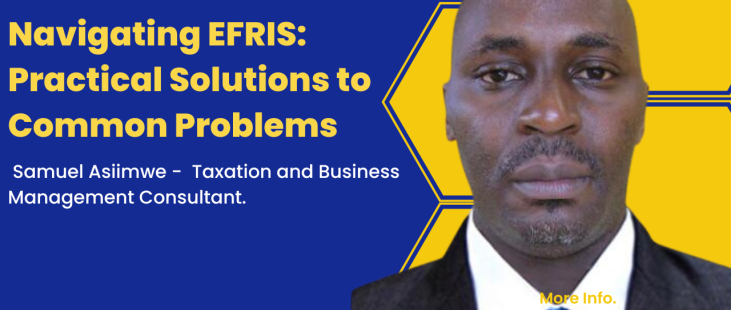



Navigating EFRIS: Practical Solutions to Common Problems
In a recent session hosted by Enterprise Uganda, tax and business management consultant Samuel Asiimwe provided invaluable insights into navigating the Integrated Financial Management Information System (EFRIS), shedding light on its impact and offering practical solutions to common challenges faced by businesses in Uganda.
Understanding EFRIS and Its Requirements
EFRIS, mandated under the Procedures Code Amendment Act of 2018, poses both opportunities and challenges for businesses. Samuel Asiimwe emphasized its requirement for specific hardware, reliable power, internet connectivity, and competent accounting personnel. He underscored the necessity of annual registration and the integration of EFRIS with existing financial accounting systems.
Practical Solutions to Implementation Challenges
Samuel Asiimwe delved into the intricacies of EFRIS implementation, addressing concerns such as invoicing errors, training gaps for new users, and its impact on small-scale suppliers. He proposed practical recommendations to mitigate these challenges, advocating for tailored training programs and grace periods for adaptation.
EFRIS and its Relationship with VAT
A critical aspect discussed was EFRIS's integration with Value Added Tax (VAT). Samuel Asiimwe elucidated on how EFRIS influences VAT calculations, emphasizing its implications for VAT-registered taxpayers in terms of sales, purchases, and compliance. He highlighted the need for businesses to align their systems to ensure seamless VAT reporting.
Challenges and Recommendations
Throughout the session, Samuel Asiimwe addressed significant challenges businesses face under EFRIS, including increased operational costs and compliance penalties. He proposed recommendations aimed at easing the transition, such as revising penalty structures and enhancing support mechanisms for small enterprises.
Key Takeaways and Lessons
Participants gained insights into the importance of proactive adaptation to regulatory changes like EFRIS. Samuel Asiimwe stressed the significance of meticulous record-keeping and the adoption of best practices to streamline operations and minimize compliance risks. His session resonated with attendees, offering a roadmap to navigate EFRIS effectively amidst evolving business landscapes.
Watch the Full Session
For a comprehensive understanding of navigating EFRIS and practical solutions to common problems, watch the full session recording [here](YouTube link).
Conclusion
Navigating EFRIS requires a proactive approach and strategic alignment of business operations. Samuel Asiimwe's expertise provided attendees with actionable insights and practical strategies to optimize their EFRIS implementation journey. As businesses continue to adapt to regulatory changes, embracing technology and best practices will be key to thriving in Uganda's evolving economic environment.
